EU unveils $1.1B push for AI sovereignty

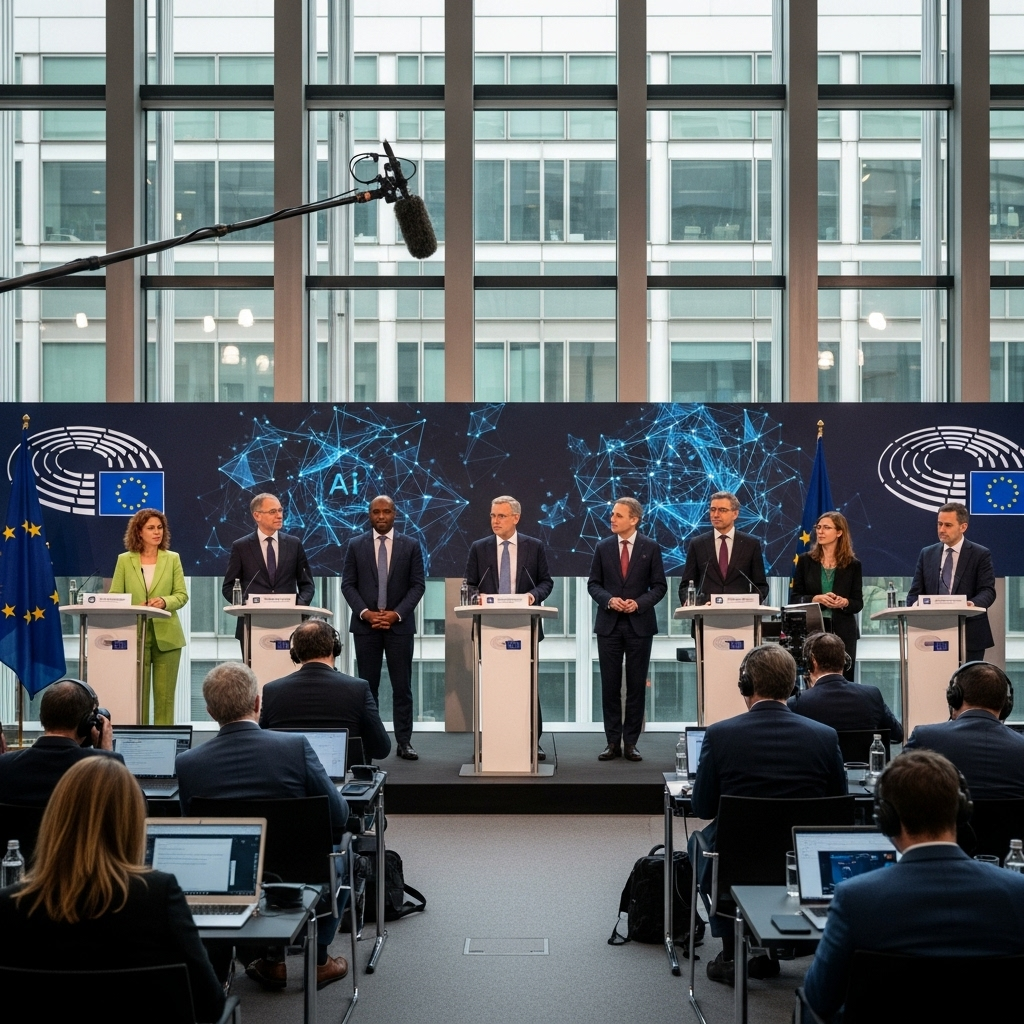
EU unveils $1.1B push for AI sovereignty
EU earmarks $1.1B to speed up homegrown AI
The European Commission’s $1.1B Apply AI Strategy funds skills, commercialization, and alliances to boost EU AI; experts say more investment is needed.

The European Commission has unveiled a $1.1 billion package to accelerate the use of artificial intelligence across Europe, aiming to strengthen technological sovereignty and close competitive gaps.
$1.1B
Initial EU package to accelerate AI adoption
2 support pillars
Apply AI Alliance and AI Act Service Desk
Focus sectors
Healthcare, pharma, energy, mobility, manufacturing
What the Apply AI Strategy includes
- Make Europe’s workforce “AI‑ready”: expand training and upskilling to bring AI skills into mainstream roles.
- Shorten the lab‑to‑market path: help researchers and startups commercialize more quickly.
- Connect key players: link academia, industry, and the public sector to accelerate adoption in priority sectors.
Two pillars to support adoption
1) Apply AI Alliance
A forum uniting innovators from government, academia, and civil society to share best practices, coordinate projects, and reduce fragmentation across the EU.
2) AI Act Service Desk
A guidance hub to help organizations implement the EU’s AI Act, which took effect in August 2024. The desk aims to clarify compliance requirements and lower the cost of adoption for SMEs and public bodies.
Funding will be channelled through existing EU programs, including Horizon Europe and DigitalEurope.
Target sectors: healthcare, pharmaceuticals, energy, mobility, and manufacturing, areas where scaled AI can lift productivity, safety, and resilience.
Competitive context: the U.K. surge
Brussels’ push comes amid concerns that Europe is lagging in AI. Outside the EU, the U.K. has drawn significant private investment: Nvidia announced plans on Oct. 7 to invest $3.5 billion in the British AI sector, supporting startups including PolyAI and Basecamp.
Nvidia‑backed cloud GPU provider Nscale recently raised $1.1 billion, and Nvidia and Nscale outlined a $13 billion commitment to U.K. AI infrastructure, signalling intense competition for capital, talent, and compute.
What analysts are saying
Analysts say the EU program is a necessary start, but not sufficient on its own. Torsten Volk of Omdia called it a catalyst that will require coordinated support from member states to havea real impact.
While $1.1 billion can help startups overcome upfront capital hurdles and clear early bottlenecks, much larger investments in talent, data centers, energy, and core infrastructure are needed to scale successful generative AI applications.
Why it matters
- Signals a clear intent to accelerate adoption and reduce EU fragmentation.
- Could unlock stalled public and private projects by guiding the AI Act.
- Creates a cross‑sector alliance to speed pilots and commercialization in strategic industries.
The bottom line
The Apply AI Strategy signals intent and could unlock stalled projects, but its long‑term effect will depend on follow‑through by EU countries and additional funding well beyond the initial package.
Inside AI Media is a global platform that covers what’s happening in AI without the fluff. From breaking news to practical use cases, it keeps professionals, builders, and decision-makers updated on the latest in artificial intelligence, so they can make better, faster decisions and stay ahead.