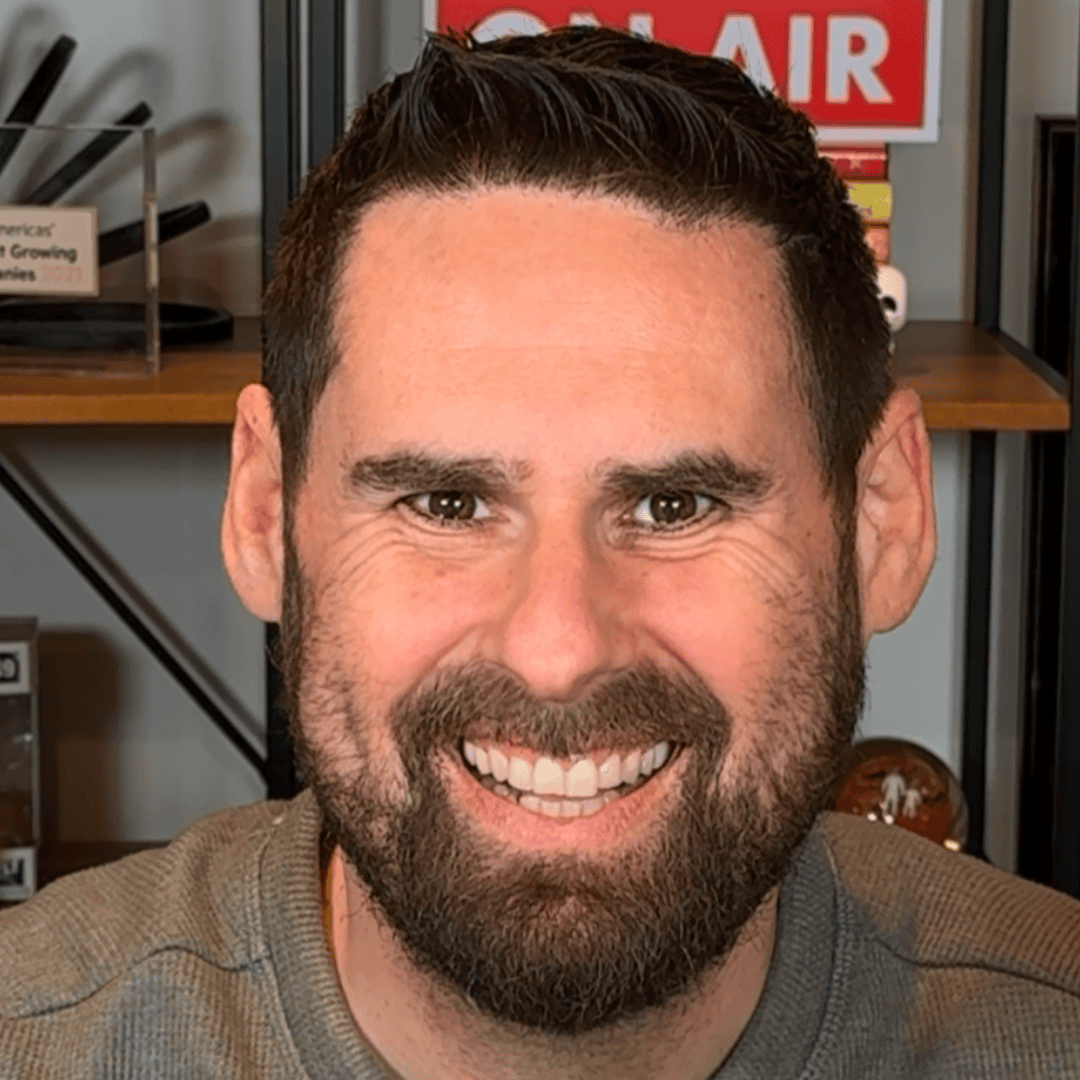
Robert Brill Is Bringing Transparency Back to an Industry Built on Complexity
Meet Robert Brill, the advertising entrepreneur who questioned why so many businesses were spending heavily on digital advertising without fully understanding what they were paying for. Read along to discover how he built Brill Media into a performance advertising agency that combines advanced technology, strategic clarity, and human connection to help businesses grow with confidence.
Ask any business owner about digital advertising, and you’ll likely hear some variation of the same story. Reports arrive packed with charts. Campaign reviews introduce new acronyms. Every platform promises smarter targeting, better optimisation, and stronger returns than the last.
Somewhere between the dashboards, recommendations, and performance updates, a simple question often gets lost: What exactly are we paying for?
For Robert Brill (CEO of Brill Media), that question revealed a much larger problem.
It Started With a Simple Question: What Are Clients Actually Paying For?
When Robert founded Brill Media in 2013, digital advertising was becoming increasingly sophisticated. Advanced targeting capabilities, automated bidding systems, and data-driven optimization promised better results than ever before. Yet behind the innovation, he noticed a recurring issue.
Many businesses did not fully understand what they were buying.
Advertising vendors often spoke in technical language. Campaign performance was buried inside dashboards and reports. Clients were told they were receiving advanced optimization and sophisticated audience targeting, but they were rarely given the transparency needed to understand how those outcomes were being achieved.
For Robert, the issue wasn’t technology. It was accountability.
He believed small and mid-sized businesses deserved access to the same expertise, tools, and strategic thinking that larger enterprises enjoyed. More importantly, they deserved a partner willing to explain the process clearly and treat every marketing dollar with respect.
That belief became the foundation of Brill Media.
Headquartered in Los Angeles, the company was built around a simple but increasingly uncommon principle: advertising should be understandable. Clients should know where their money is going, why decisions are being made, and how performance is being measured.
Over a decade later, that commitment continues to define the company.
The Industry Had Plenty of Data. Clarity Was Harder to Find.
Long before he became the CEO of Brill Media, Robert’s experiences within the advertising industry shaped how he viewed both media buying and client relationships.
While learning the mechanics of digital advertising, he developed a deep understanding of platform behavior, audience targeting, and optimization strategies. He learned how algorithms respond to signals, how small adjustments can significantly impact outcomes, and how media investments can be refined over time.
But the most valuable lessons came from working directly with clients.
Robert quickly realized that successful partnerships were built on far more than campaign performance. Businesses wanted transparency. They wanted responsiveness. Most importantly, they wanted to understand why decisions were being made. Those experiences reinforced a philosophy that continues to guide Brill Media today: trust is not a byproduct of results. It is part of the process itself.
“When clients know you’re being transparent, when they know you’re not hiding anything, the relationship becomes stronger,” Robert says.
That philosophy has allowed the company to build long-term relationships while positioning itself as more than a traditional advertising agency. Rather than simply managing campaigns, Brill Media serves as a strategic growth partner that helps businesses navigate an increasingly complex media landscape.
Today, the company works across programmatic advertising, paid social, paid search, and omnichannel media strategy. Yet despite its sophisticated capabilities, the firm’s approach remains grounded in a distinctly human principle: every click represents a real person. Advertising, Robert believes, should be both scientific and human.
Trust Turned Out to Be the Real Competitive Advantage.
As digital advertising has evolved, Robert has observed another trend that continues to hold businesses back. Many brands still approach marketing as a collection of disconnected tactics.
They launch campaigns, test new channels, adjust budgets, and chase emerging opportunities without establishing a structured framework for measurement and optimization. When results don’t appear immediately, strategies change again. According to Robert, this approach often works against the very systems brands are trying to leverage.
Modern advertising platforms depend on consistency. Algorithms learn over time. Data improves through stability. Frequent resets, abrupt shifts in strategy, and reactive decision-making can disrupt performance and limit growth.
The brands that consistently outperform their competitors understand this reality.
Rather than searching for shortcuts, they commit to long-term testing frameworks, build reliable measurement systems, and allow optimization processes to mature. They recognize that performance marketing is not a switch that can be turned on and off at will. It is a process that rewards patience and disciplined execution. This is why Brill Media focuses heavily on helping clients build systems rather than simply launching campaigns.
Systems create consistency. Consistency creates insights. And insights create sustainable growth.
Chasing Results Is Easy. Building Momentum Is The Real Deal.
In today’s advertising environment, businesses often feel pressured to prioritize immediate results.
Acquisition targets, revenue goals, and quarterly performance expectations naturally push attention toward short-term outcomes. While those objectives are important, Robert believes many organizations underestimate the role brand equity plays in long-term growth.
At Brill Media, performance marketing and brand building are not treated as competing priorities. Some campaigns are designed to generate immediate revenue and customer acquisition. Others focus on creating familiarity, trust, and long-term demand. Together, they create a stronger and more sustainable growth engine.
When brand equity is consistently nurtured, performance campaigns become more efficient. Customer acquisition costs decline. Retention improves. Lifetime value increases. The relationship is complementary, not competitive.
Robert often reminds clients that brand building is not an activity reserved for periods of economic comfort. It is an ongoing investment that strengthens future performance and creates resilience during changing market conditions.
The businesses that understand this balance are often the ones that achieve the most sustainable growth.
As the Company Grew, Staying Close to Clients Mattered Even More.
As Brill Media expanded, Robert faced a challenge familiar to many founders.
In the early years, he handled nearly every aspect of the business himself. Campaign management, optimization, sales, reporting, and operations all flowed through him at one point or another. While that approach worked initially, growth eventually demanded a different leadership model.
The transition was not immediate.
Learning to delegate required trust, structure, and a willingness to shift focus away from daily execution. Instead of solving every operational challenge personally, Robert began investing more time in vision, culture, and long-term strategy.
At the same time, Brill Media developed systems designed to preserve both consistency and client intimacy.
Rather than allowing scale to create distance, the company built processes that strengthened relationships. Clients continued working closely with knowledgeable team members who understood their businesses and remained invested in their success. For Robert, growth was never about becoming larger for its own sake. It was about building an organization capable of delivering expertise at scale without sacrificing personal connection.
Losing a Major Client Forced Some Hard Conversations.
Every entrepreneurial journey has defining moments. For Robert, one came when Brill Media lost a long-term client that accounted for a significant share of its revenue. The client was preparing for a sale and chose to consolidate its marketing operations.
While the decision was understandable, the impact was significant. The experience forced the company to confront a difficult reality: too much revenue was concentrated among a small number of accounts.
Rather than viewing the setback purely as a loss, Robert treated it as an opportunity for reflection. The company diversified its client portfolio, introduced subscription-based services that created predictable recurring revenue, and clarified its ideal customer profile. It also sharpened its positioning within an increasingly crowded marketplace.
Looking back, Robert views that period as a turning point. The challenge exposed vulnerabilities, but it ultimately strengthened the business and made it more resilient.
Sometimes growth begins with discomfort.
AI Is Moving Fast. Human Judgment Still Matters. And Will Continue To.
Few developments are reshaping advertising more rapidly than artificial intelligence.
Robert believes AI-driven automation will significantly influence how campaigns are managed, optimized, and scaled in the years ahead. Creative production is becoming faster. Optimization is becoming more efficient. Strategic insights are becoming increasingly data-rich. But AI is only one part of a larger transformation.
Privacy-focused data models are forcing businesses to rethink how they collect and activate customer information. At the same time, digital attention continues consolidating across a relatively small number of dominant platforms.
For agencies and advertisers alike, adaptability will become increasingly important. Robert’s forward-looking mindset is one reason Brill Media continues investing heavily in AI-powered media strategy while maintaining its commitment to transparency and human-centered decision-making.
Substantiating this, Lynda Flores (Director of Accounts at Brill Media) states: “The future of media strategy is all about relevance. When brands respect people’s time and attention, performance naturally follows. The next era of marketing will reward clarity, consistency, and authentic engagement.”
Bringing Big-Brand Advertising Within Reach.
Entrepreneurship has taught Robert many lessons over the years, but perhaps the most important is that resilience is not about avoiding challenges. It is about moving through them.
Building a company requires making decisions without complete information, remaining steady during uncertainty, and continuing forward even when outcomes are not guaranteed. It also requires humility, because success is rarely achieved alone.
Looking ahead, Robert wants Brill Media to continue making sophisticated advertising more accessible to businesses of all sizes. The company’s inclusion on both the Financial Times 500 and Inc. 500 lists for three consecutive years reflects meaningful progress, but he views those achievements as milestones rather than destinations.
The larger mission remains unchanged. He wants businesses to have access to the tools, strategies, and expertise they need to compete confidently in an increasingly digital world.
In the End, It Comes Down to Making a Difference.
If there is a legacy he hopes Brill Media leaves behind, it is one rooted in integrity, innovation, and measurable impact. A company that treated clients with respect. A company that used technology responsibly. A company that helped businesses grow in ways that were both meaningful and sustainable.
In an industry often defined by complexity, Robert Brill has spent more than a decade pursuing something remarkably straightforward: helping businesses understand what growth really looks like, and giving them the tools to achieve it.
“I hope they say we built a company rooted in integrity, innovation, and impact. I hope they say we treated clients with respect, used technology responsibly, and helped businesses grow in ways that felt meaningful and sustainable. Most of all, I hope they say we made a difference. That we helped reshape what’s possible for advertisers everywhere,” aspires Robert.