OpenAI’s $1 Trillion Plan: Bubble or Breakthrough?

OpenAI’s $1 Trillion Plan: Bubble or Breakthrough?
AI’s $1 Trillion Stress Test
The stakes for the 2025 rally
The 2025 bull run is riding on one big unknown: whether the artificial-intelligence spending surge is sustainable, or the making of a bubble. At the heart of it is OpenAI, whose ambitions and obligations have grown to a scale without precedent for a private company.
The investment surge
AI demand is intense, but much of today’s investment is justified by expected future returns. This year alone, Meta Platforms, Amazon, Alphabet, and Microsoft are on track to spend about $335 billion on capital projects. Since 2024, AI start-ups have raised roughly $259 billion, according to Crunchbase. No company has done more to stoke expectations than OpenAI, maker of ChatGPT, which ignited the current cycle in 2022 and now sits at the center of the trade.
OpenAI’s unprecedented commitments
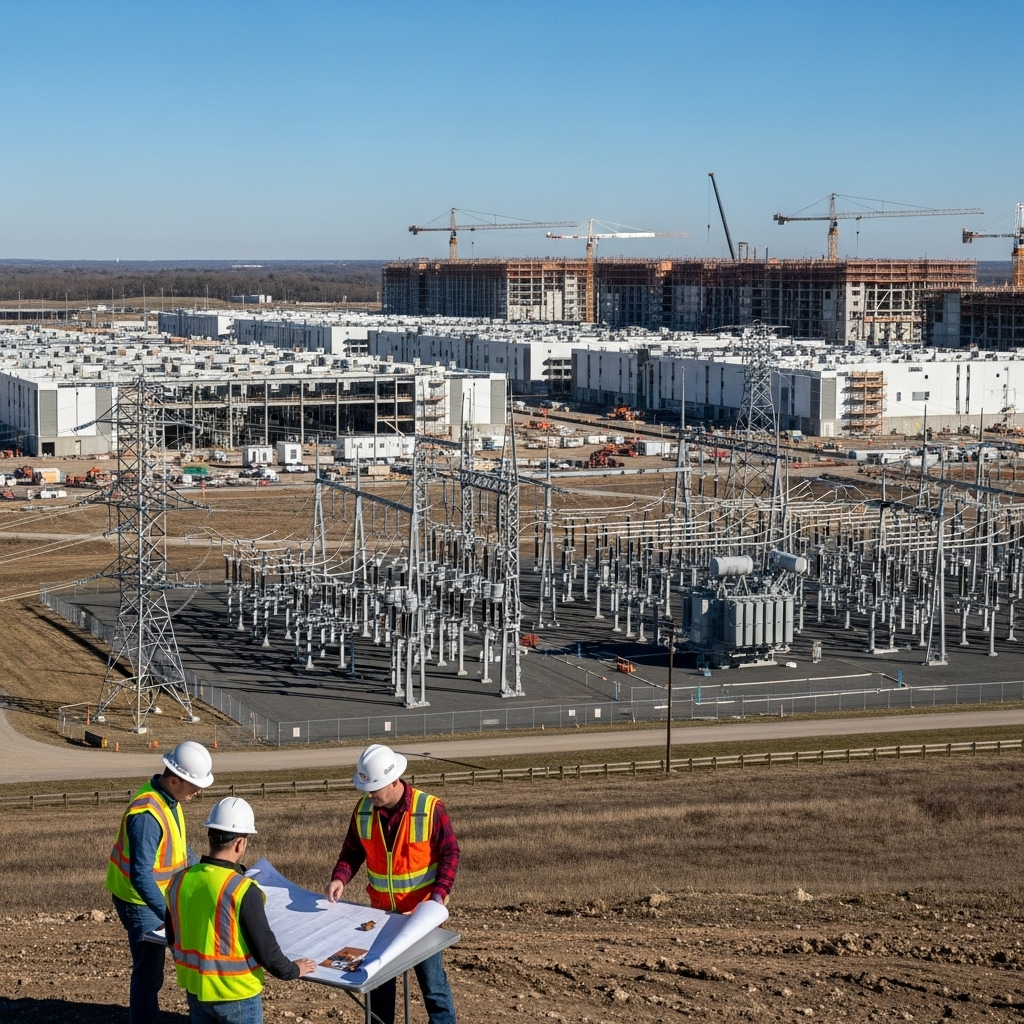
OpenAI closed a record $40 billion funding round this year, yet that sum is small compared with the commitments it has made. After CEO Sam Altman floated a trillion-dollar data-center plan in 2024 to scale ChatGPT to Google Search–like reach, the company has moved to lock in infrastructure at breakneck speed. OpenAI now has agreements for about 16 gigawatts of data centers worldwide, capacity that Wall Street estimates could cost roughly $750 billion to build. It has also committed to buy about $300 billion of cloud services from Oracle over the next five years. Taken together, OpenAI and its partners are effectively on the hook for around $1 trillion.
Who’s backing the buildout
Some heavyweight backers are in the mix. Nvidia is expected to cover about $100 billion of data-center spending in exchange for an equity stake in OpenAI, a modern echo of the dot-com era’s circular financing. Additional support is slated to come from partners such as Oracle and SoftBank. Even so, that still leaves on the order of $800 billion to fund, an extraordinary sum by any historical yardstick.
The funding paths, tested
How could that gap be filled? None of the usual paths, cash flows, equity issuance, or debt, looks easy at this scale.
- Cash flows: Even if OpenAI matured into a business with Apple-like profitability, covering $800 billion from free cash flow would take years. Apple’s own decade of cumulative free cash flow approximates that figure.
- Equity: Across the past 45 years, inflation-adjusted proceeds from all tech IPOs total about $600 billion, per University of Florida professor Jay Ritter’s data. During the peak of the dot-com era (1995–2000), tech IPOs raised $209 billion, roughly a quarter of what OpenAI would still need. Private markets are larger today, but $800 billion is close to the last four years of total U.S. private fundraising, according to Crunchbase.
- Debt: The bond market could help, but the comparison is sobering. Verizon, among the most indebted companies, carries roughly $164 billion in net debt supported by about $265 billion in tangible assets and wireless licenses. OpenAI would need far more borrowing with far fewer hard assets to pledge.
The power problem
There’s also a constraint even tougher than money: electricity. The 16-gigawatt buildout implied by OpenAI’s agreements with Nvidia and Advanced Micro Devices would require power roughly equivalent to 15 of the newest U.S. nuclear reactors. Georgia’s Vogtle 3 and 4 units, each about 1.1 gigawatts, ultimately cost more than $30 billion and took 15 years to complete, far above their initial $14 billion, eight-year plan. While small modular reactors are often cited as a future solution, none have been built in the U.S., and no near-term projects are scheduled. In the meantime, many AI facilities may have to lean on gas turbine generators that ramp quickly but face efficiency, emissions, and local permitting hurdles.
Ripple effects and counterparty risk
If the financing or power doesn’t materialize, the knock-on effects could be severe. Consider Oracle: after unveiling its cloud deal with OpenAI, Oracle’s shares surged 36% in a single session, adding about $248 billion in market value. Should OpenAI struggle to fund its obligations, that optimism could unwind, just one example of the counterparty risk radiating from a single private company to chip suppliers, cloud hosts, land developers, utilities, and equipment makers.
Bubble or breakthrough?
Whether this is a bubble remains an open question. What is clear is the market’s unusual dependence on one start-up’s execution. The next phase of the AI story will turn on simple realities, cash, capital markets, and kilowatts. If those align, today’s spending could seed a durable boom. If they don’t, the 2025 rally may have a single point of failure at its core.
Inside AI Media is a global platform that covers what’s happening in AI without the fluff. From breaking news to practical use cases, it keeps professionals, builders, and decision-makers updated on the latest in artificial intelligence, so they can make better, faster decisions and stay ahead.