

- Global Insights on Cannabis Automation and Team Culture
- The Global Push Toward Automation
- Empowering the Workforce Through Automation
- Protecting Culture During Rapid Growth
- Build for Agility with Flexible, Modular Systems
- When to Automate: Output-Based Milestones
- Regional Snapshots & Strategy Considerations
- Operational Resilience: Plan for Downtime
- Key Takeaways for Manufacturers
Global Strategies for Cannabis Automation and Workforce Growth
Global Insights on Cannabis Automation and Team Culture
As cannabis markets expand globally, companies are learning that efficient scaling paired with strong organizational culture is key to long-term success. Operators in regions from North America and Europe to Latin America and Asia are embracing automation throughout the supply chain—including cultivation, processing, manufacturing, packaging, and retail—to boost margins and meet evolving consumer demands.
The Global Push Toward Automation
Automation is increasingly necessary as labor costs rise and manual processes struggle to keep pace. For example, Canadian companies have relied on automation to navigate tighter margins, while German businesses prioritize automated systems to meet both consumer demand and strict GMP standards. In export-focused markets like Colombia, even low labor costs don’t outweigh the need for compliance and traceability, pushing automation to the forefront.
What This Means for Operators
- Integrate automation where manual processes limit throughput or quality consistency.
- Prioritize systems that support compliance, traceability, and data capture across facilities.
- Choose equipment that aligns with GMP and export requirements in target markets.
Empowering the Workforce Through Automation
Workforce concerns are common, but many cannabis companies report that automation actually enriches staff skills. By automating repetitive tasks—such as pre-roll production—teams can be retrained for roles in packaging, quality assurance, inventory, compliance, or machine operation. This broadens career opportunities and transforms positions such as “machine operator” into highly skilled, technical roles, increasing retention and employee engagement.
Protecting Culture During Rapid Growth
Preserving company culture during rapid growth is crucial. Successful operators approach automation with a people-focused strategy by cross-training staff, offering advancement opportunities, and recognizing technical expertise. This ensures employees are invested in the organization’s future and the technology they use.
Build for Agility with Flexible, Modular Systems
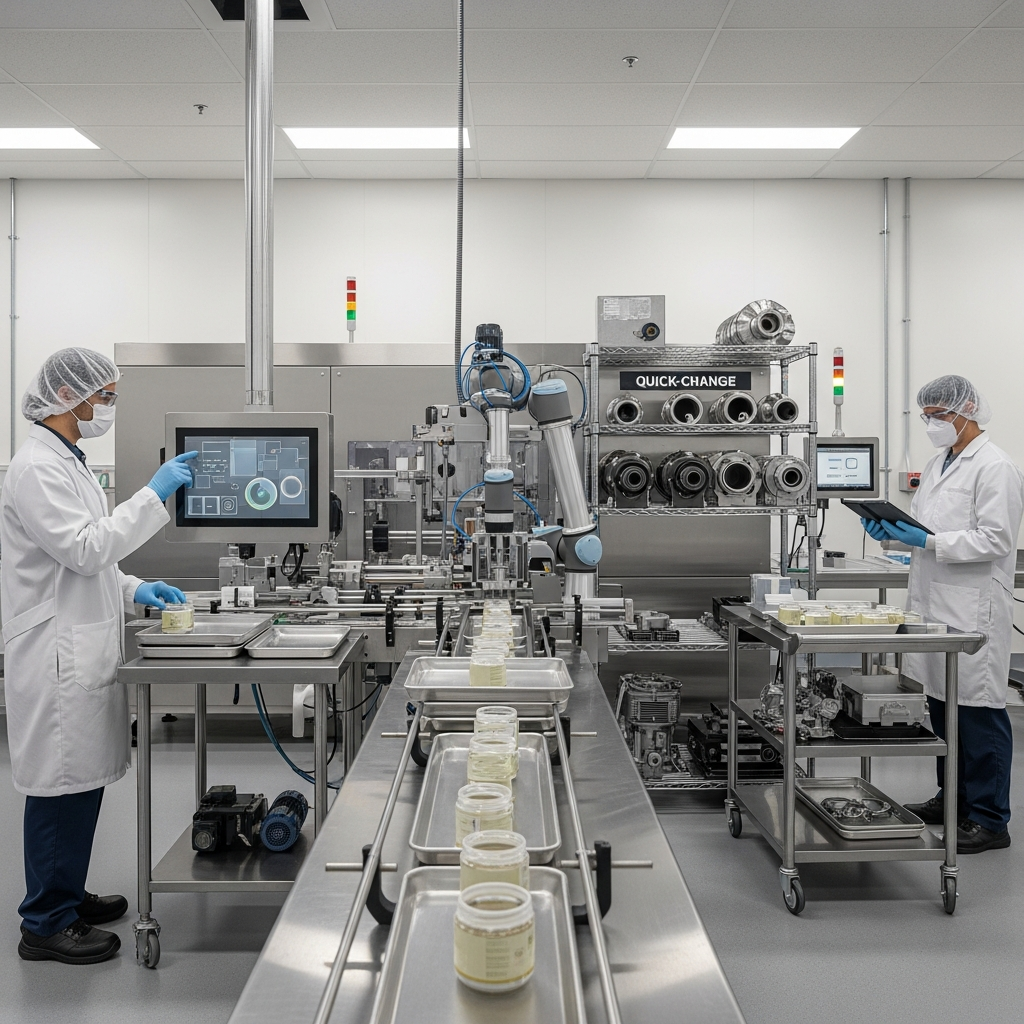
The ability to adapt to market changes is also essential. Flexible, modular automation systems allow businesses to handle new product formats and adjust to shifting regulations without the need for costly equipment replacements. Investing in adaptable machinery helps protect both operational efficiency and employee expertise.
Favor platforms with swappable tooling, recipe-driven changeovers, and open data protocols to future-proof your line.
When to Automate: Output-Based Milestones
Deciding when to automate is a strategic choice:
- Under 10,000 units/month: Manual systems may be sufficient.
- 10,000–50,000 units/month: Automation becomes vital—especially if adding labor doesn’t resolve bottlenecks.
- 50,000+ units/month: Large producers must automate to maintain profitability and scale sustainably.
Regional Snapshots & Strategy Considerations
Examining global markets, automation trends differ based on local regulations and infrastructure:
- Canada: A mature industry where tighter margins drive deep automation across cultivation, processing, and packaging.
- United States: Fragmented market encourages state-by-state strategies; flexible equipment is key to navigate varied regulations.
- Germany: Compliance-driven rollout with strict GMP expectations makes validated, traceable systems essential.
- Thailand: Regulatory volatility favors modular investments that can pivot quickly.
- Colombia: Export emphasis means traceability, consistency, and compliance-first automation—even with lower labor costs.
- Australia & New Zealand: Cautious, medical-first approach requires reliable, compliant processes and scalable capacity.
Operational Resilience: Plan for Downtime
Operators should also plan for equipment downtime by providing spare parts, training resources, and empowering staff to solve minor problems internally. Building this resilience further strengthens both operations and team morale.
Downtime Readiness
- Stock critical spares and consumables.
- Create quick-reference SOPs for line resets.
- Train tech operators to troubleshoot first-line issues.
People & Process
- Cross-train across shifts and lines.
- Recognize and reward technical expertise.
- Document learnings to improve changeovers.
Key Takeaways for Manufacturers
- Automate to create agility and scale with consistency.
- Choose flexible, modular equipment that prepares you for future product formats and regulations.
- Pair technology investments with staff development to boost retention and engagement.
- Build resilience with spare parts, training, and empowered problem-solving on the line.
When done well, automation not only improves productivity but also fosters a robust, loyal workforce capable of adapting to market changes and driving growth.