Supply chains broke in public over the last few years, and the lesson stuck: the teams that saw problems early recovered fastest. Spreadsheets and gut feel do not see far enough anymore.
That is why AI supply chain software has moved from a nice-to-have to the control tower most large operations now run on. The best tools forecast demand, optimize inventory, track shipments in real time, and flag supplier risk before it turns into a stockout.
The catch is that “AI supply chain platform” covers wildly different things, from a full integrated-planning brain to a focused visibility tool that deploys in weeks. Buying the wrong layer is expensive.
We grouped the 10 strongest supply chain AI solutions by the function they serve, planning, inventory, logistics visibility, risk, and procurement, so you can match a tool to your weakest link. If your operation is factory-heavy, pair this with our best AI tools for manufacturing guide.
Here is what made the cut.
TL;DR: What You Need to Know
The best AI tools for supply chain depend on the link in the chain. For demand planning and forecasting, o9 Solutions, Kinaxis Maestro, Blue Yonder, and RELEX lead. For inventory and bottlenecks, ThroughPut is sharp. For tracking shipments in real time, project44 and FourKites own visibility. For supplier risk, Interos watches your network, and Coupa brings AI to procurement. Most are enterprise AI supply chain platforms, so start with your weakest link, planning, visibility, or risk, and pilot before rolling out across the chain.
Pricing verified July 2026. AI tool pricing changes often, so confirm the current price on each vendor’s site before you subscribe. Inside AI Media is not an AI tool vendor; these picks are ranked on merit, not promotion.
The Best AI Tools for Supply Chain at a Glance
Here is how the main supply chain AI software compares on the job it does, the use case, and pricing model. Supply chain software is almost entirely quote-based and tied to scale, so confirm with the vendor.
| Tool | Best For | Use Case | Pricing |
|---|---|---|---|
| o9 Solutions | Integrated planning | Demand / planning | Quote |
| Kinaxis Maestro | Concurrent planning | Planning / S&OP | Quote |
| Blue Yonder | End-to-end supply chain | Planning / fulfillment | Quote |
| RELEX Solutions | Retail + demand planning | Planning / inventory | Quote |
| ThroughPut | Inventory + bottlenecks | Inventory ops | Quote |
| project44 | Real-time transport visibility | Logistics visibility | Quote |
| FourKites | Shipment tracking | Logistics visibility | Quote |
| Interos | Supplier risk monitoring | Risk / resilience | Quote |
| Coupa | AI procurement and spend | Procurement | Quote |
| C3 AI | Enterprise supply chain AI | Analytics platform | Quote |
How Is AI Used in Supply Chain?
AI works across every link in the chain. It forecasts demand more accurately than spreadsheets, optimizes inventory so you hold neither too much nor too little, plans production and distribution, tracks shipments in real time and predicts delays, monitors suppliers for risk and disruption, and automates procurement and spend analysis. The thread running through every AI supply chain platform is using data to see further ahead and react faster, which is exactly what recent disruptions exposed as the weak point. The biggest wins are usually in demand forecasting, inventory optimization, and end-to-end visibility.
How We Picked These Supply Chain AI Solutions
We are an independent publisher and do not sell artificial intelligence supply chain software, so none of these picks is our own product. We grouped tools by the supply chain function they serve, then weighed each on proven results, how well it integrates with existing ERP and logistics systems, and fit for the problem rather than buying one giant suite. Because these are major investments, we note where a tool is a broad planning platform versus a focused, faster-to-deploy specialist.
Best AI Tools for Planning and Demand Forecasting
Getting the forecast right is the foundation everything else depends on, and this is where most AI supply chain planning software earns its keep.
1. o9 Solutions
Best for: Connected, AI-driven demand and supply planning.
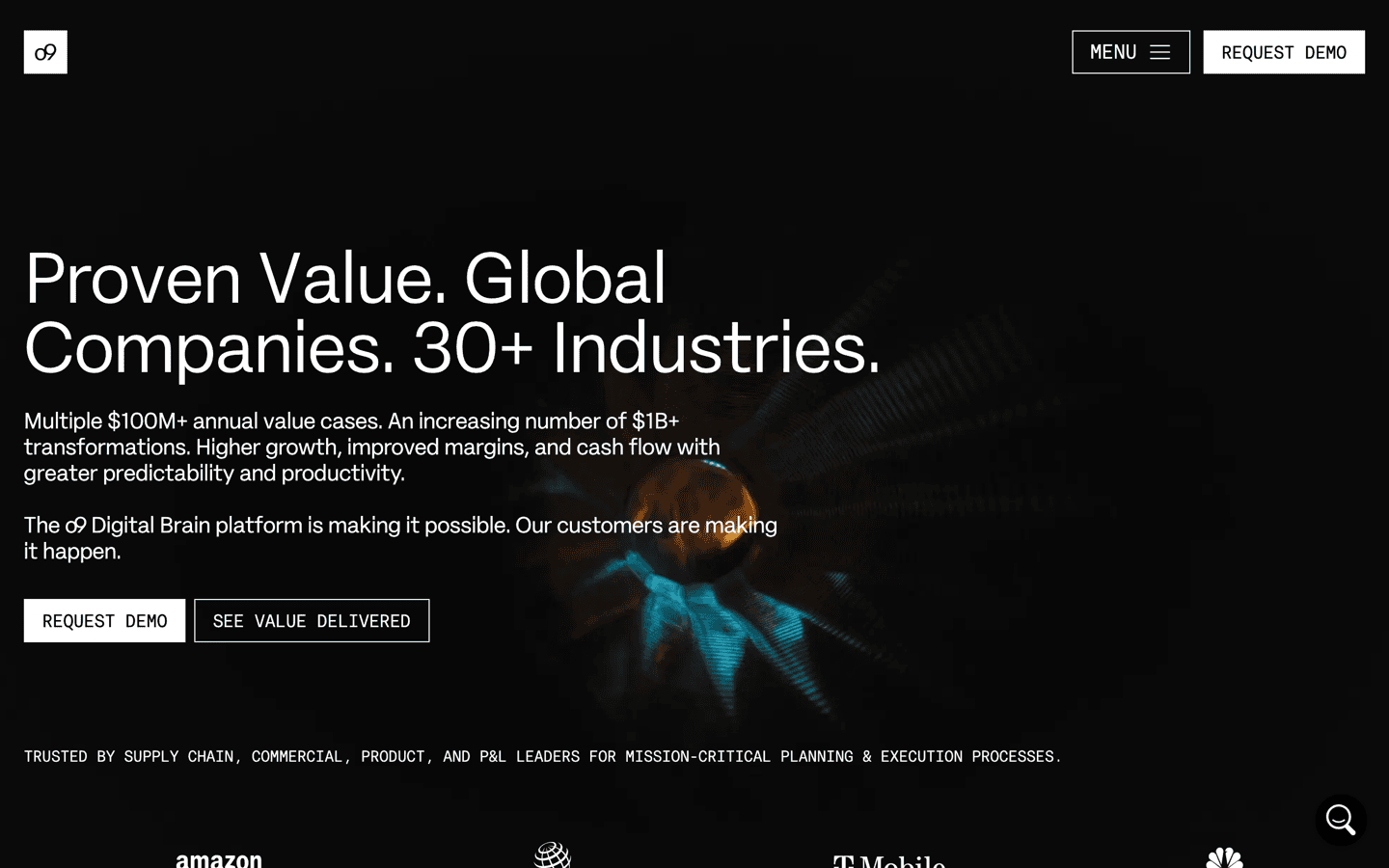
o9 Solutions calls itself a “digital brain” for the supply chain, using AI to connect demand, supply, and financial planning in one model so the whole business plans from the same picture. Its forecasting and scenario planning are strong, and it is built for large enterprises that want integrated, AI-driven planning rather than disconnected spreadsheets.
- Pricing: Enterprise quote.
- Skip if: you want a focused tool, not a planning platform.
2. Kinaxis Maestro
Best for: Fast scenario planning and rapid replanning.
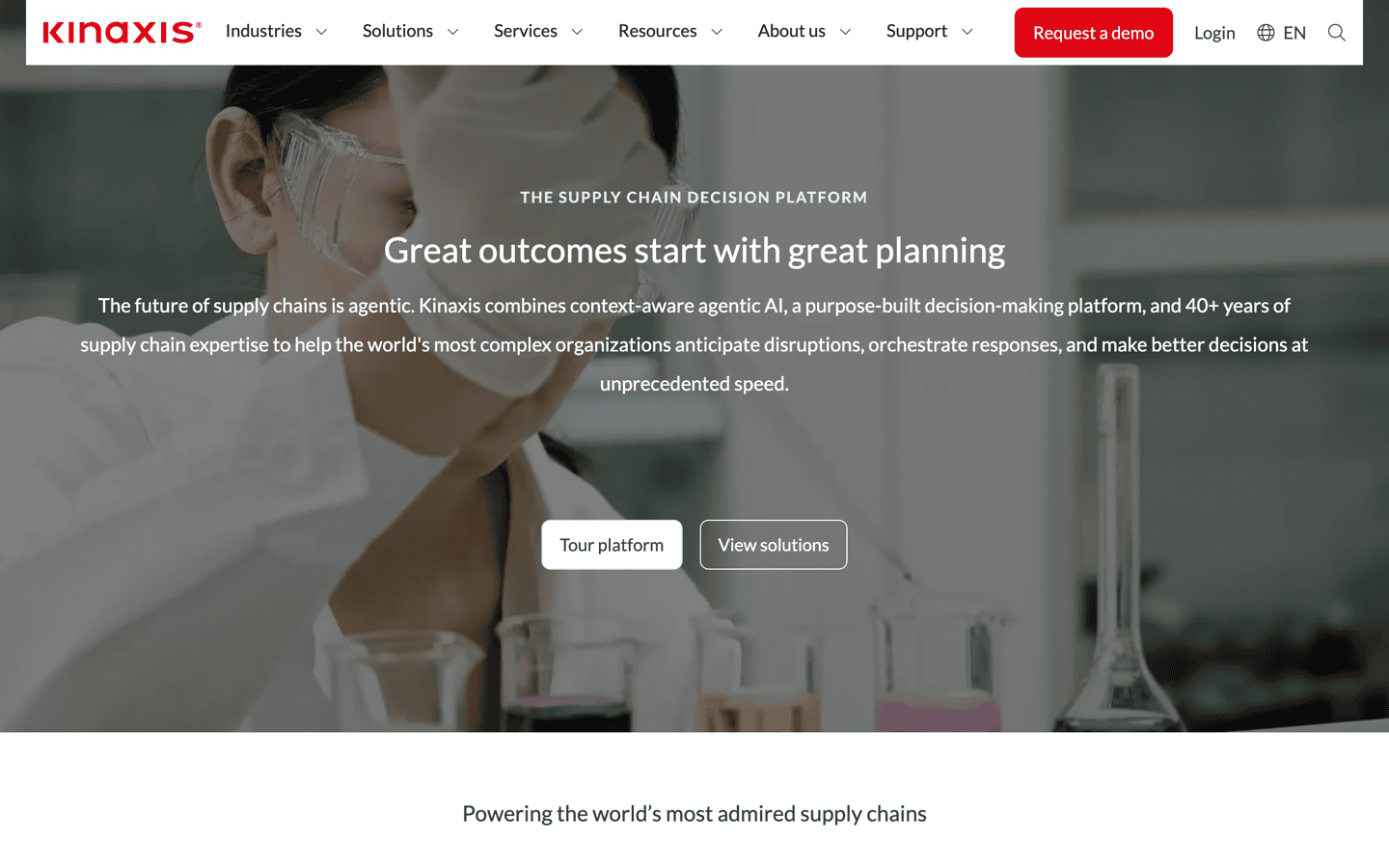
Kinaxis, through its Maestro platform, is known for concurrent planning: changing one variable and instantly seeing the impact across the entire supply chain, powered by AI for forecasting and scenario analysis. For manufacturers and distributors that need to replan fast when conditions shift, its speed and what-if analysis are the draw.
- Pricing: Enterprise quote.
- Skip if: you have simple, stable planning needs.
3. Blue Yonder
Best for: Broad, end-to-end supply chain management.
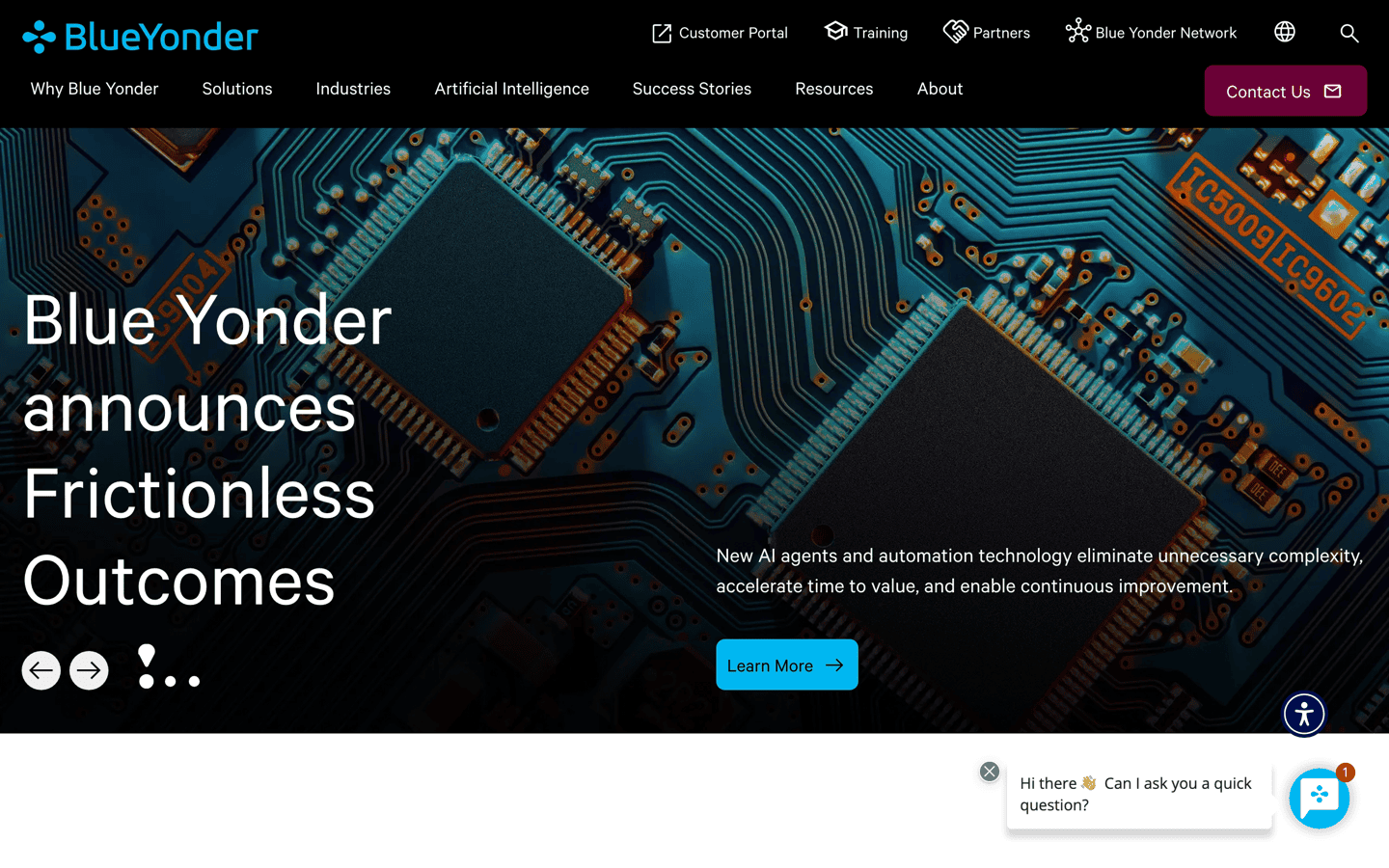
Blue Yonder offers an AI-driven platform spanning planning, execution, and fulfillment, from demand forecasting to warehouse and transportation management. As one of the most established names in supply chain software, it suits large organizations that want a single vendor across many links of the chain.
- Pricing: Enterprise quote.
- Skip if: you only need one capability.
4. RELEX Solutions
Best for: Retail and CPG demand, replenishment, and inventory.
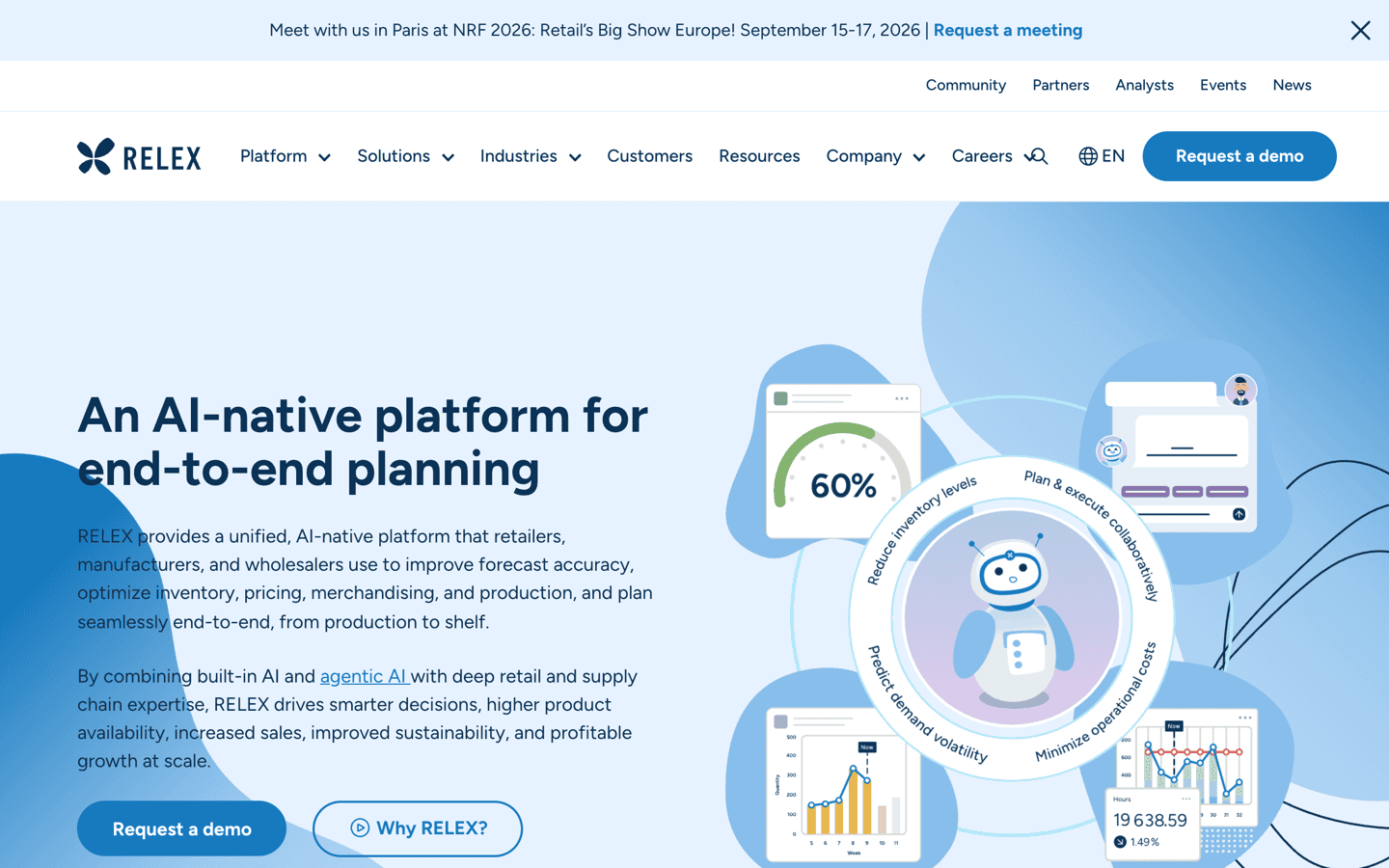
RELEX is a unified AI supply chain planning platform strong in retail and consumer goods, combining demand forecasting, automated replenishment, allocation, and inventory optimization in one system. Its machine-learning forecasts factor in promotions, weather, and seasonality, which makes it a standout for retailers and distributors that live and die by shelf availability.
- Pricing: Enterprise quote.
- Skip if: you are a discrete manufacturer, not retail or CPG.
Best AI Tool for Inventory Optimization
5. ThroughPut
Best for: Optimizing inventory, capacity, and bottlenecks.
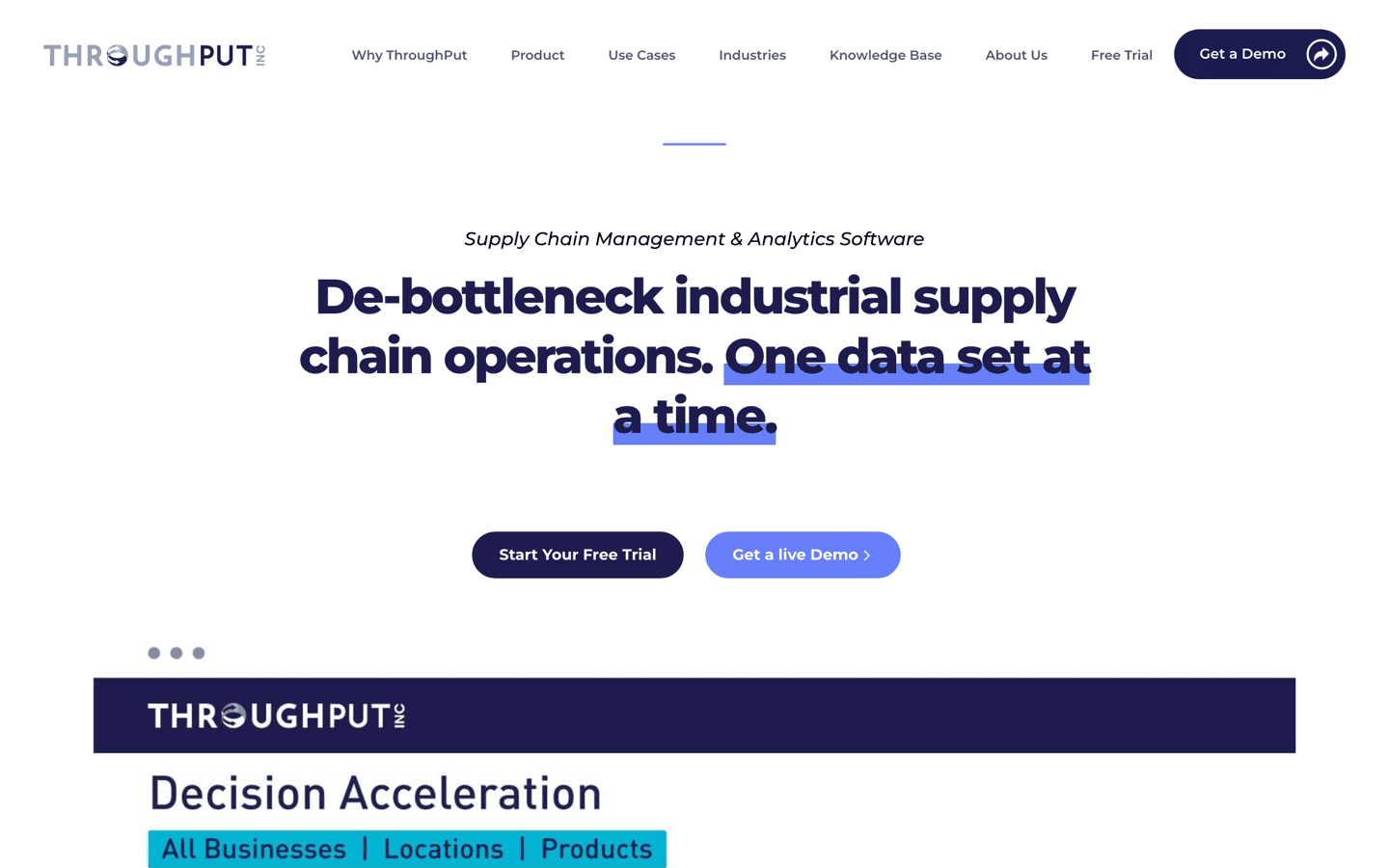
ThroughPut, through its Eli engine, uses AI to spot bottlenecks and optimize inventory and capacity, helping teams free up cash tied in stock and improve flow. It is more focused and faster to deploy than a full planning suite, which makes it a practical pick for operations teams that want to fix inventory and throughput problems specifically.
- Pricing: Quote-based.
- Skip if: you need full demand and supply planning.
Best AI Tools for Logistics Visibility
You cannot manage what you cannot see, and these track goods in motion.
6. project44
Best for: Real-time, multi-modal shipment visibility and ETAs.
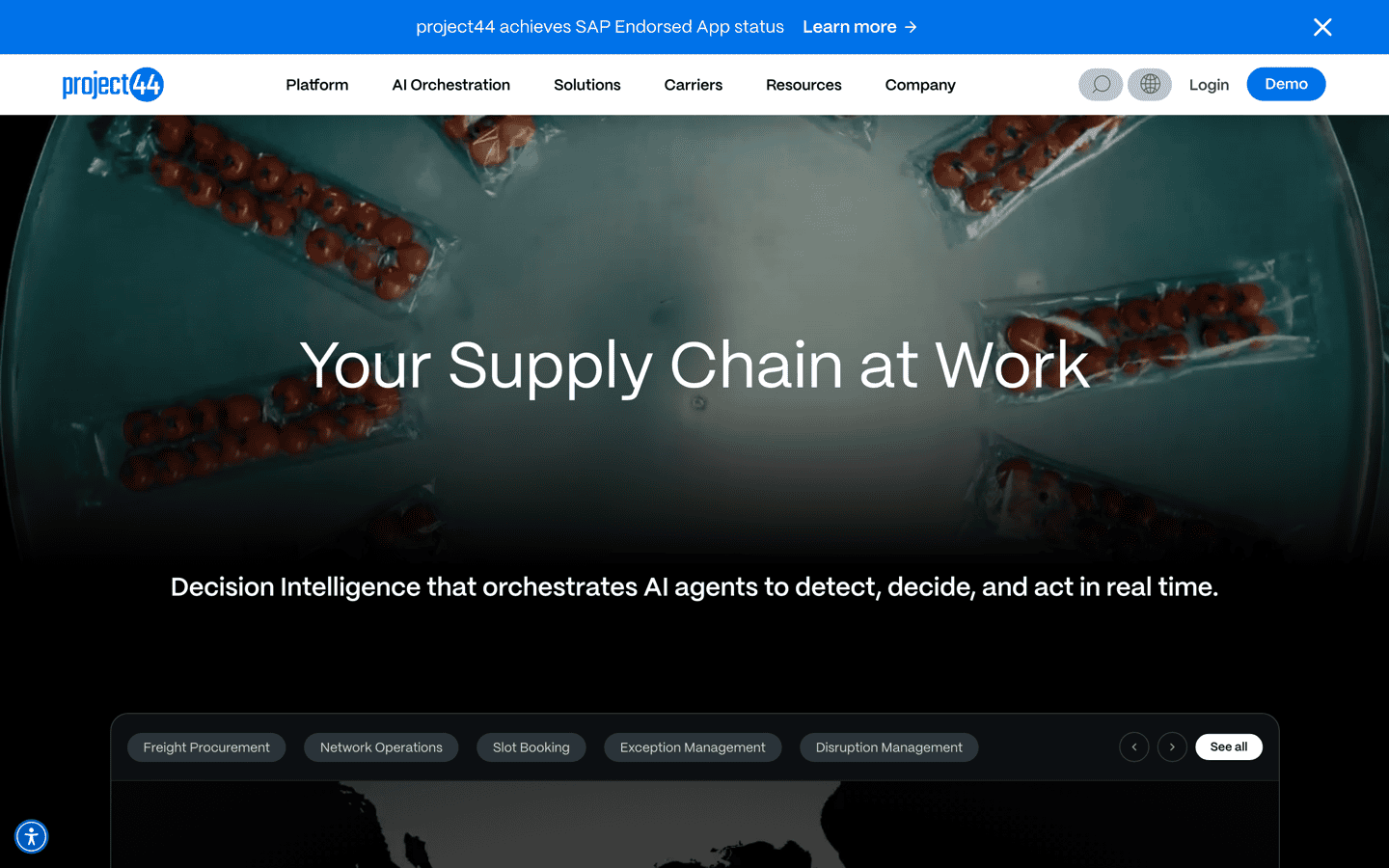
project44 provides real-time visibility across transportation modes, using AI to track shipments, predict arrival times, and flag delays before they cascade. For shippers and logistics teams that lose time and trust to “where is my order,” its accurate ETAs and exception alerts are a direct fix.
- Pricing: Quote-based.
- Skip if: your logistics footprint is small and simple.
7. FourKites
Best for: End-to-end shipment tracking and delay prediction.
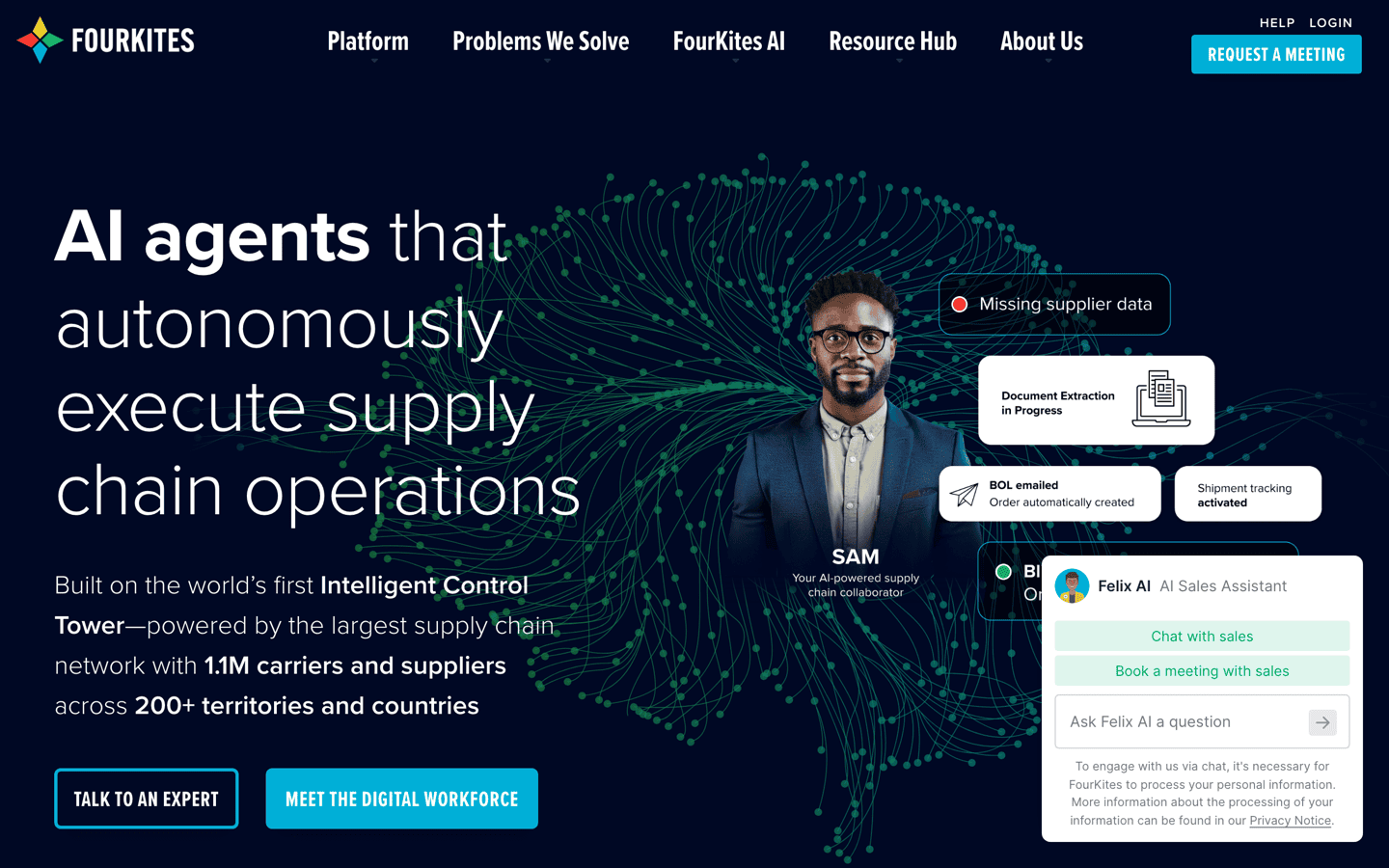
FourKites is a leading supply chain visibility platform that tracks shipments in real time and uses AI to predict delays and automate exception handling across road, ocean, rail, and air. It overlaps with project44, so most teams evaluate the two together and pick on coverage and integrations for their lanes.
- Pricing: Quote-based.
- Skip if: you already have strong visibility in place.
Best AI Tools for Risk and Procurement
Resilience and spend are where AI protects the chain from shocks and waste.
8. Interos
Best for: Continuous, multi-tier supplier risk monitoring.
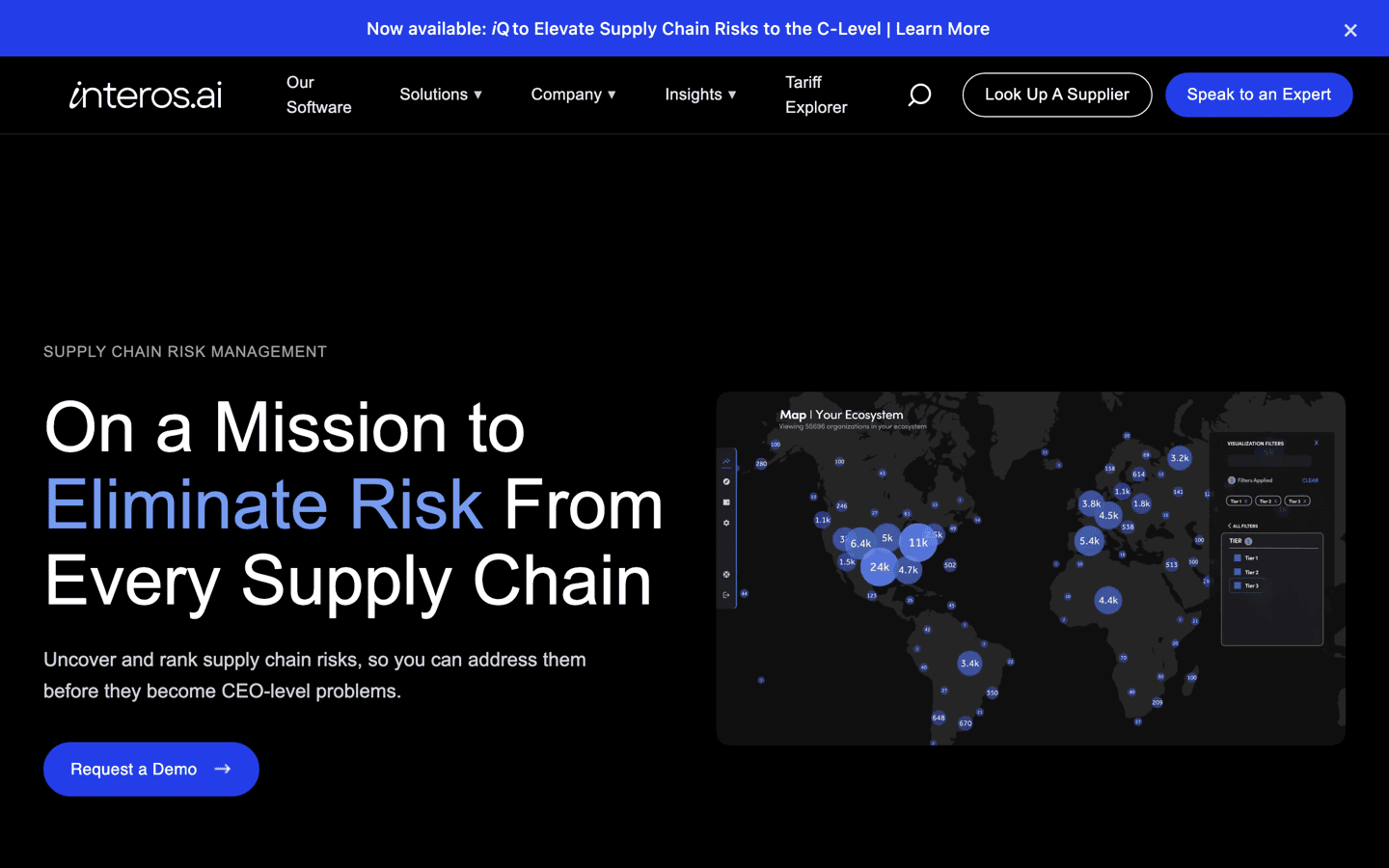
Interos uses AI to map and continuously monitor your supplier network, flagging financial, geopolitical, cyber, and operational risks deep into your supply base before they become disruptions. After years of supply shocks, that early warning across multiple tiers of suppliers is exactly the resilience large organizations now want.
- Pricing: Enterprise quote.
- Skip if: you have a small, well-known supplier base.
9. Coupa
Best for: AI-driven procurement and spend optimization.
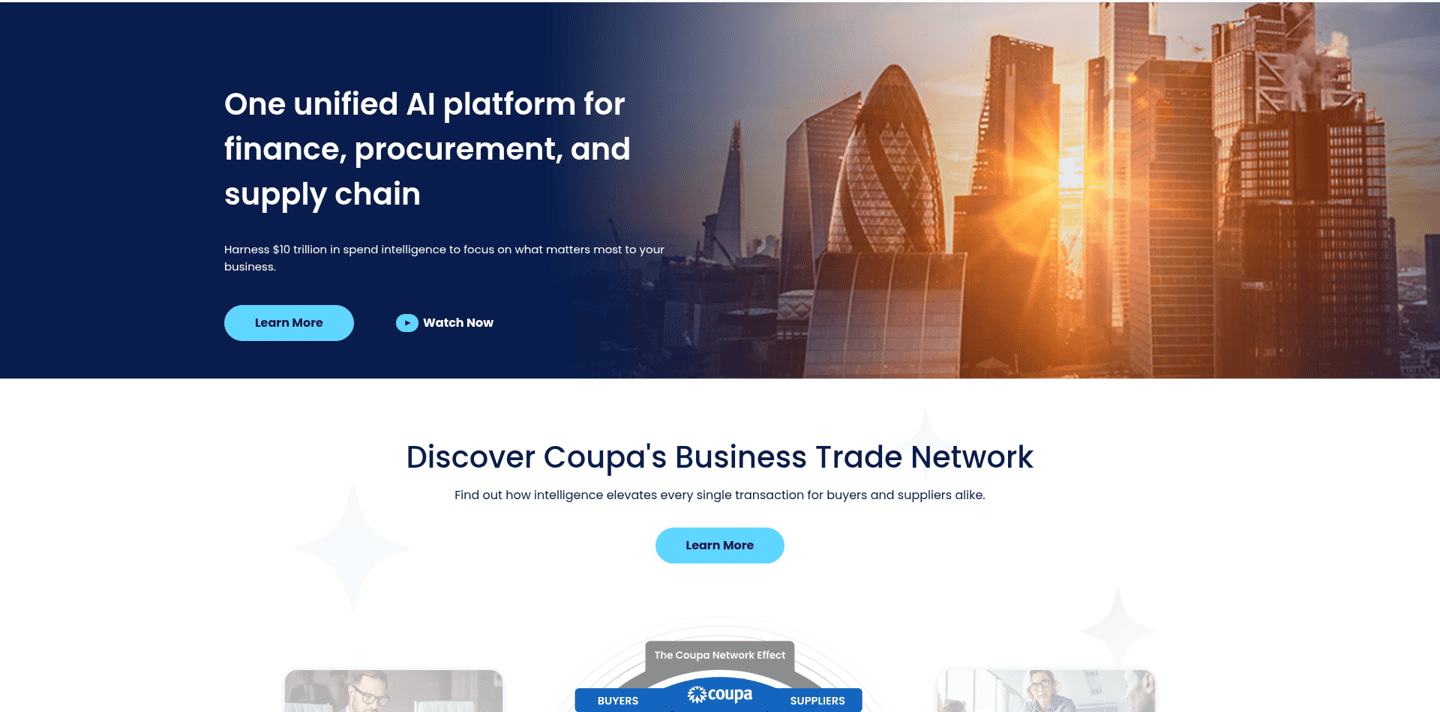
Coupa applies AI to procurement and spend management, surfacing savings, guiding buyers, and using community data to benchmark and optimize purchasing. For organizations that want to control spend and make procurement smarter, it brings intelligence to a function that is often manual and fragmented.
- Pricing: Enterprise quote.
- Skip if: procurement is not a major cost center for you.
Best AI Platform for Supply Chain Analytics
10. C3 AI
Best for: Large-scale, configurable supply chain AI.
C3 AI offers enterprise AI applications for supply chain, including inventory optimization and supply network risk, built to run advanced AI at scale across complex operations. It suits large organizations that want a configurable artificial intelligence supply chain platform spanning several problems rather than separate point tools.
- Pricing: Enterprise quote.
- Skip if: you prefer a focused, single-purpose tool.
How to Choose AI Tools for Supply Chain
Start with your weakest link. If forecasts are always wrong, begin with a planning platform like o9, Kinaxis, Blue Yonder, or RELEX. If cash is trapped in stock, a focused tool like ThroughPut moves faster. If you are blind to where goods are, visibility from project44 or FourKites is the fix, and if supplier disruption keeps hurting you, Interos watches the network. Procurement-heavy organizations get the most from Coupa. Define the metric you want to move, forecast accuracy, inventory turns, on-time delivery, or supplier risk, pilot on one region or product line, and prove the return before scaling across the chain.
The Bottom Line
There is no single best AI supply chain software, only the one that fixes your weakest link. Lead with planning (o9, Kinaxis, Blue Yonder, RELEX) if forecasts drive your pain, ThroughPut if inventory is trapping cash, project44 or FourKites if you are blind in transit, Interos for supplier risk, and Coupa for procurement. Pick one clear metric, pilot on a single lane or product line, and expand only once the return is proven. Bought that way, these supply chain AI solutions pay for themselves before they scale.
Frequently Asked Questions
It depends on the problem. o9 Solutions, Kinaxis Maestro, Blue Yonder, and RELEX lead for planning, ThroughPut for inventory, project44 and FourKites for logistics visibility, Interos for supplier risk, and Coupa for procurement. The best pick matches your weakest link rather than trying to do everything at once.
For integrated planning, o9 Solutions and Kinaxis Maestro are the most-cited AI supply chain software; RELEX leads for retail and CPG, project44 and FourKites for visibility, and C3 AI for a configurable enterprise platform. Match the tool to the function you most need to fix.
AI supply chain planning software uses machine learning to forecast demand, balance supply, and run scenario plans so teams can replan quickly when conditions change. o9 Solutions, Kinaxis Maestro, Blue Yonder, and RELEX are the leading examples.
AI is used for demand forecasting, inventory optimization, production and distribution planning, real-time shipment tracking and delay prediction, supplier risk monitoring, and procurement and spend analysis. The aim is to see further ahead and react faster, reducing cost, stockouts, and disruption.
It varies by use case, but the common gains are better forecast accuracy, lower inventory, fewer stockouts, improved on-time delivery, and earlier warning of disruption. The strongest returns usually come from demand forecasting and inventory optimization, which is why many organizations start there and expand once they see results.
The biggest platforms target enterprises, but more focused AI/ML supply chain software for visibility, inventory, or procurement is increasingly accessible to mid-sized companies, and many vendors offer pilots. Smaller organizations usually get the best return by solving one clear problem first rather than buying a full suite.
AI improves resilience by monitoring suppliers and logistics for risk in real time, predicting disruptions before they hit, and running scenarios so teams can plan responses in advance. Tools like Interos for supplier risk and concurrent planning platforms for fast replanning are built specifically to absorb shocks better.

Inside AI Media is a global platform that covers what’s happening in AI without the fluff. From breaking news to practical use cases, it keeps professionals, builders, and decision-makers updated on the latest in artificial intelligence, so they can make better, faster decisions and stay ahead.