

CAG Launches Tech-Driven Reforms for Public Audit in India
Summary
India’s Comptroller and Auditor General (CAG) is rolling out data-driven, technology-enabled reforms to modernize public audits, standardize methods, and elevate transparency—anchored by a new Centre of Excellence for Financial Audit in Hyderabad and the development of a proprietary Large Language Model, CAG-LLM.
A Tech-Driven Overhaul of Public Audits
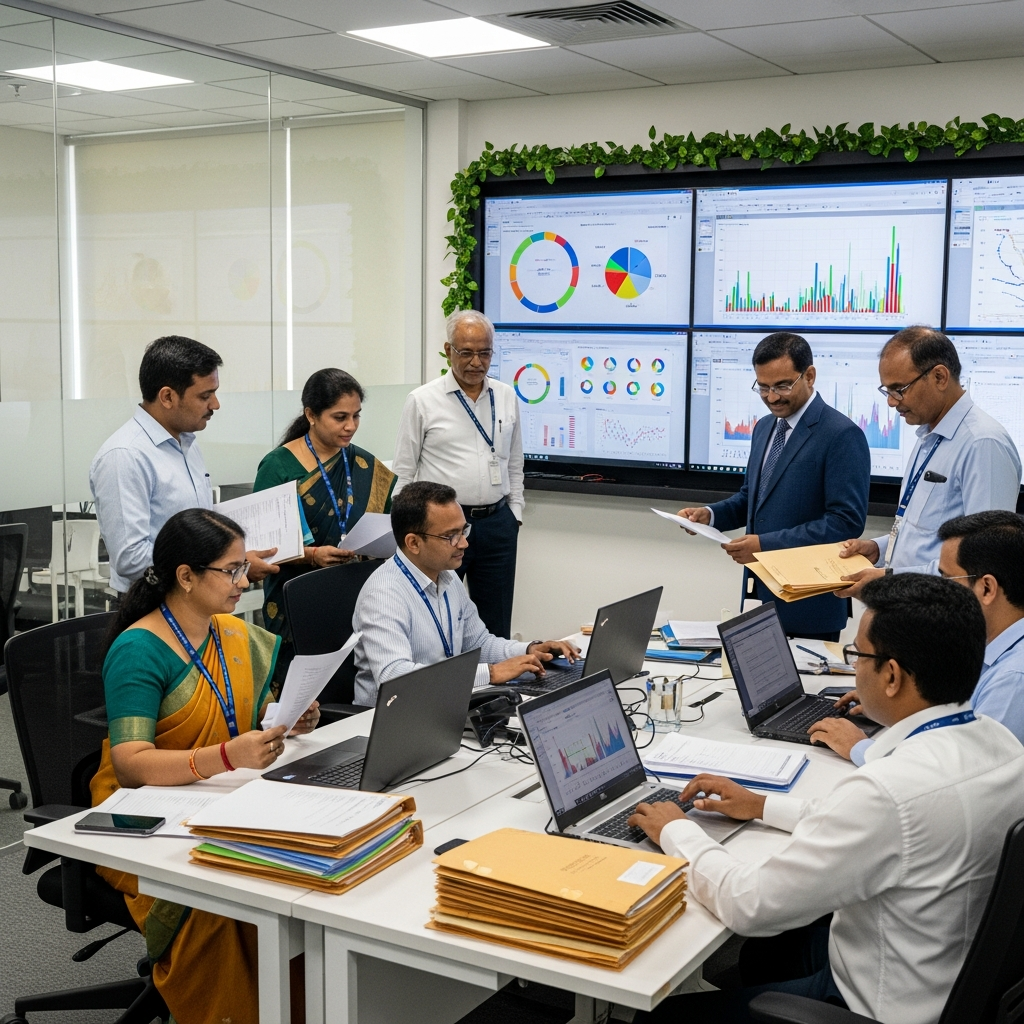
India’s Comptroller and Auditor General (CAG) is initiating a comprehensive transformation of the country’s public audit process, focusing on data-driven and technology-enabled reviews. This overhaul includes the adoption of artificial intelligence (AI), advanced analytics, and increased institutional competence to ensure more effective financial oversight.
Centre of Excellence for Financial Audit, Hyderabad
A major step in this direction is the creation of a Centre of Excellence for Financial Audit in Hyderabad. Announced by Deputy CAG (Commercial & Report Central) A.M. Bajaj, the center aims to unify and standardize audit methods across government departments.
Currently, inconsistent audit templates among autonomous bodies complicate policy decisions; the new facility hopes to address this by enabling clear, comparable, and robust financial reporting throughout the public sector. The Centre of Excellence is expected to serve as an innovation and training hub, bringing global best practices into India’s financial auditing system. It will also reinforce the CAG’s role as the premier audit institution and set new international standards for professionalism and transparency in audits.
What the Centre Will Enable
- Unified audit methodologies and templates across departments
- Training and capacity-building in data-driven audits
- Adoption of global best practices and standards
- More comparable and decision-ready financial reporting
Integrating Data Across Audit and Accounting
As part of the reforms, departments have been instructed to break down barriers between audit and accounting functions. Treating accounts offices as valuable sources of detailed financial data, the initiative encourages audit teams to draw on a wide array of documents—such as vouchers and sanctions—through integrated systems.
This represents a transition from traditional sample-based audits towards comprehensive analysis of entire datasets using advanced technology.
CAG-LLM: AI for Targeted, Evidence-Based Audits
Central to these technological advancements is the development of CAG-LLM, a proprietary Large Language Model built locally. This AI tool will provide predictive insights, detect anomalies, and enhance risk assessments, allowing audits to be more targeted and based on thorough evidence.
From Sample-Based to Full-Dataset Audits
- Automated anomaly detection across entire ledgers
- Risk scoring for targeted scrutiny
- Faster evidence collection via integrated document access
Embedding ESG Into Public Financial Management
In addition, the CAG is increasingly factoring in environmental, social, and governance (ESG) standards within its auditing framework. This expanded focus aligns with global trends around sustainability and responsible public financial management.
Expected Impact: Transparency, Trust, and Better Policy
Through these measures—emphasizing technology, data integration, and standardized procedures—the CAG aims to enhance transparency, public trust, and the quality of audits, supporting more informed policymaking and sustainable governance.
Key Reforms at a Glance
- Centre of Excellence for Financial Audit (Hyderabad)
- Standardized audit templates and methodologies
- Integrated access to vouchers, sanctions, and accounting data
- Shift to comprehensive dataset analysis using AI and analytics
- CAG-LLM for predictive insights, anomaly detection, and risk assessment
- Incorporation of ESG standards in audit frameworks