
Elon Musk: AI Could Make Work and Money Obsolete in 20 Years
Elon Musk, CEO of Tesla, has speculated that artificial intelligence and advanced robotics may soon render traditional jobs unnecessary and make money irrelevant—potentially within 10 to 20 years. Speaking at the U.S.-Saudi Arabia Investment Forum in Washington, D.C., Musk compared the future of employment to growing vegetables in a backyard, suggesting people may work not out of necessity, but for personal satisfaction.
Key Takeaways
- Musk envisions AI and robotics making most jobs optional within 10–20 years, with money becoming less relevant.
- He points to a post-scarcity future reminiscent of Iain M. Banks’ Culture series.
- Ideas like “universal high income” (akin to UBI) are floated as social support mechanisms.
- Economists caution that robotics scale-up is lagging, and wealth distribution remains uneven.
- Beyond economics, a post-work world raises questions about meaning and purpose.
Musk’s Vision: Optional Work in a Post-Scarcity Economy
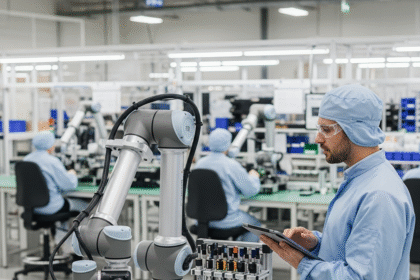
Musk believes that as AI and robotics progress, millions of robots could dramatically boost productivity, allowing most people to opt out of work if they choose. He imagines jobs becoming voluntary activities—more like hobbies—because intelligent systems can meet nearly all economic needs. Drawing a cultural parallel, he referenced Iain M. Banks’ Culture novels, where superintelligent AIs enable a post-scarcity society without the need for money.
“We may work for fulfillment, not necessity—much like gardening in your backyard.”
A Social Safety Net: “Universal High Income”
Earlier this year at Viva Technology 2024, Musk mentioned the idea of a “universal high income,” related to universal basic income (UBI), as a way to support individuals in a world where work is no longer essential. The concept aligns with views from other AI leaders—OpenAI CEO Sam Altman has likewise supported unconditional, regular payments for everyone.
Skepticism and Technical Constraints
Despite rapid progress in AI, economists note that robotics—especially for physical tasks—remains expensive and difficult to scale. Ioana Marinescu of the University of Pennsylvania points out that automation in physical labor is advancing more slowly than in digital domains, and AI’s broader labor market impact has not yet drastically disrupted employment patterns.
Economics vs. Engineering Reality
While inference costs for AI models are falling, the hardware, integration, and maintenance required for widespread robotic automation remain nontrivial. The path from pilot projects to ubiquitous deployment involves capital, safety, and regulatory hurdles that could extend timelines far beyond a single decade.
Distribution, Policy, and Political Will
Another major concern is how society would handle potential mass unemployment. Samuel Solomon, a labor economist at Temple University, argues that achieving broad prosperity in a highly automated world will require not just technological advances but also significant political will to implement systems like UBI or similar transfers. Current trends indicate that wealth generated by AI is concentrating among high-earning individuals and companies, rather than being widely shared.
Who Benefits—and How?
Without deliberate policy, productivity gains may not translate into universal wellbeing. Designing equitable funding mechanisms for income programs, updating tax structures, and ensuring access to essential services will be central to converting automation dividends into social benefits.
Beyond Logistics: Purpose in a Post-Work Era
Experts like Anton Korinek at the University of Virginia highlight deeper human questions. If labor loses its economic importance, society may need to redefine how people find meaning, as many relationships and sources of fulfillment currently stem from work. Musk himself acknowledges that humans may continue to play a role in providing purpose to superintelligent AI systems—and to one another.
The existential challenge isn’t just “What will we do?”—it’s “What will make life meaningful?”
Outlook
The prospect of optional work and an AI-driven, post-monetary society excites Musk and many technologists. Yet the timeline and desirability remain uncertain. Technical milestones in robotics, policy innovation for income support, and societal adaptations around meaning will determine whether this vision is achievable—or even preferable—in the coming decades.