
Why Supply Chain Automation Fails: Root Causes & Solutions
Why Supply Chain Automation Stalls Before It Begins
A Delayed Ship, A Missed Moment
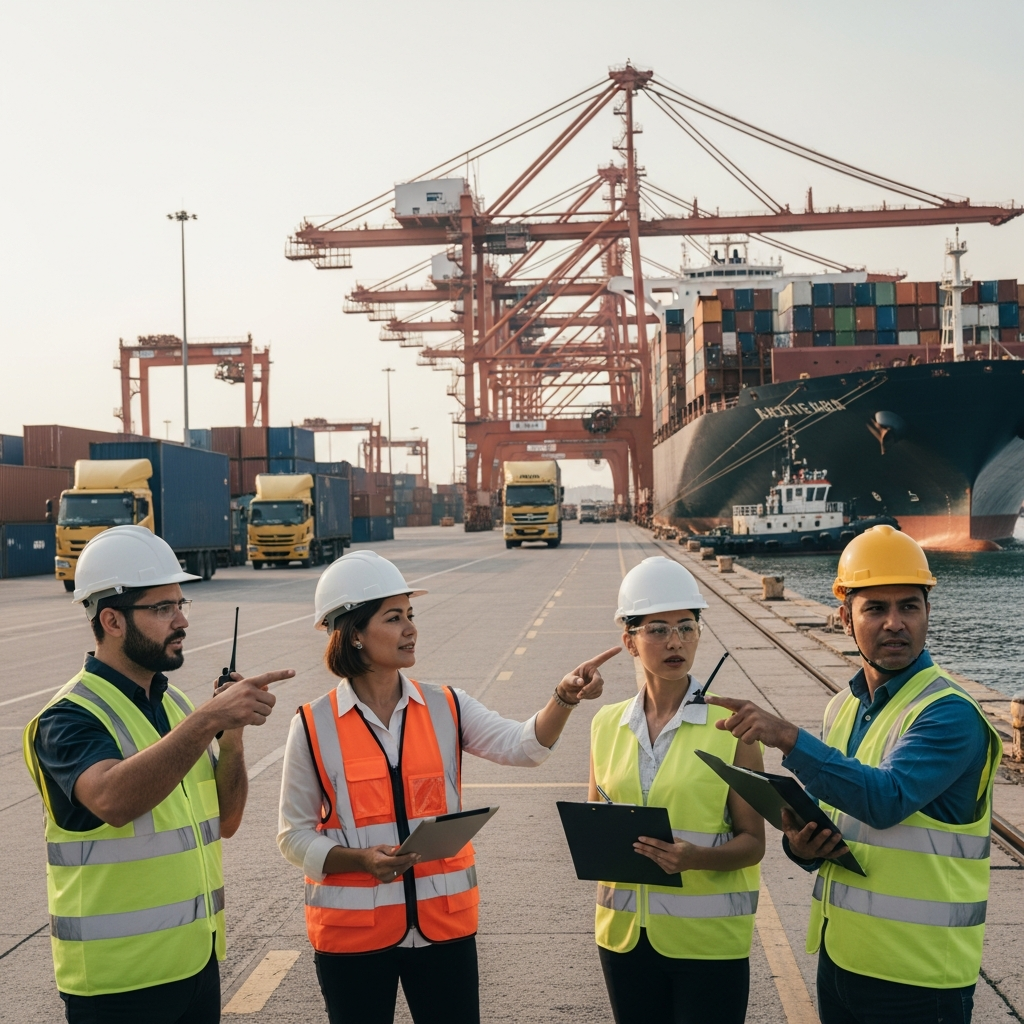
As a container ship pulls into port two days behind schedule, it holds products linked to several purchase orders — from essentials that can wait, to limited-time promotional items, to fast-selling SKUs already low in stores. The import, procurement, merchandising, and store operations teams all scramble to mitigate the disruption, but delays in communication mean crucial response windows are missed. Instead of seamless coordination, everyone is left reacting to problems after it’s too late.
This scenario highlights a common roadblock in supply chain automation: not technological limitations, but the lack of shared understanding and context across business systems during critical moments.
Key takeaway: Disruptions are detected, but without shared context, their business impact isn’t — so responses remain too slow or misdirected.
Visibility Alone Isn’t Enough
In today’s large organizations, tracking shipments in real time is standard. While transportation teams can pinpoint their trucks, and warehouses know what’s received, these data points often remain siloed. Each department interprets events through its own lens — container numbers, purchase orders, SKUs, or labor schedules — without a shared view of how each piece impacts broader business goals, like a promotion’s success or margin protection.
The systems may detect disruptions, but miss their significance. As a result, even advanced automation is limited to minor process improvements rather than driving major financial outcomes.
Automation’s Incremental Gains
Many supply chain automation efforts yield time savings in minutes — optimizing dock schedules or refining replenishment orders — but stop short of preventing high-impact coordination failures. For example, a two-day shipping delay may barely affect routine inventory but could devastate products meant for time-sensitive promotions. Without connecting shipment data to calendars, distribution center capacity, in-store trends, and merchandising plans, automation can’t prioritize or orchestrate responses effectively.
To move beyond incremental gains, automation must be context-aware:
- Link shipments and containers to specific purchase orders and SKUs.
- Map arrivals to promotional calendars and store-level demand trends.
- Understand DC capacity, labor constraints, and cut-off times.
- Surface business impact automatically (e.g., risk to full-price sales or margin).
The Missing Semantic Layer
The underlying challenge lies at what’s known as the semantic layer — a machine-readable, shared understanding of business events and objects across all systems. Without it, even the most sophisticated models can’t act independently or cross-functionally. This layer gives automation the context to judge significance, not just detect activity.
Events
ETA changes, port holds, carrier exceptions, ASN updates, and DC arrival scans.
Objects
Containers, POs, SKUs, promos, stores, labor shifts, trailers, and doors.
Meaning
“This delay jeopardizes a weekend promo; re-slot labor, cross-dock, and expedite to top stores.”
High Costs of Disconnection
For major retailers managing billions in inventory, poor coordination translates quickly into significant expenses. Sudden arrivals can force overtime and unplanned labor, missed promotions lead to lost full-price sales, and mistimed deliveries rack up fees. Automation that truly impacts the bottom line must understand and act upon the underlying business context — not just move goods faster from point A to B.
To do this, companies need a unified, real-time semantic layer linking all operational systems — from transportation to warehouse, from carriers to suppliers — so that AI can fully understand both the position and the purpose of every shipment.
Building Automation for Real Financial Impact
If your automation only speeds up processes without boosting financial results, the real obstacle is likely a missing foundation that ties data into meaningful business context rather than any AI shortcoming. Improving automation isn’t just about adding new tools — it’s about ensuring your infrastructure allows systems to interpret event implications for business goals, enabling them to orchestrate, not simply react.
- Unify identifiers: Resolve containers, POs, SKUs, promos, and stores to a shared graph so all systems “speak” the same language.
- Contextualize signals: Enrich raw events (ETA changes, exceptions) with business meaning (promo risk, margin impact).
- Prioritize by value: Rank actions by financial outcomes, not operational convenience.
- Automate playbooks: Trigger cross-functional workflows (re-slot labor, cross-dock, reallocate inventory) when thresholds are met.
- Measure impact: Tie automations to KPIs like full-price sell-through, markdown avoidance, OT reduction, and service-level adherence.
Ultimately, having the right semantic layer is the difference between automation that merely accelerates individual tasks and automation that genuinely prevents margin loss and improves business outcomes. Without this, even the best AI will continue to escalate decisions to people because it can’t see the full picture or connect the dots across your supply chain.
Bottom Line
Visibility is table stakes. Value comes when your automation understands purpose, not just position — and that requires a unified, real-time semantic layer that connects events to outcomes across transportation, warehousing, merchandising, and stores.