
IEEE publishes humanoid robot standards framework
IEEE releases a new framework to guide humanoid robot standards, prioritizing classification, stability, and human-robot interaction after a year-long study.
Overview
The Institute of Electrical and Electronics Engineers (IEEE) has released the final version of a framework to guide standards for humanoid robots, aiming to narrow the gap between fast-moving innovation and slower regulatory progress. The document is part of the organization’s broader effort to chart a roadmap for humanoid development.
Produced by the IEEE Humanoid Study Group, the report concludes that many existing robotics standards fall short for bipedal machines. They don’t adequately address the dynamic, inherently unstable nature of humanoid locomotion or the complex physical and psychological dimensions of working around people. Rather than prescribing definitive rules, the report lays out findings and recommendations intended to shape the next phase of standards work.
Key priorities highlighted by the study
- Classification: Establish a clear taxonomy for humanoids that captures physical capabilities, behavioral complexity, and humanoid-specific attributes.
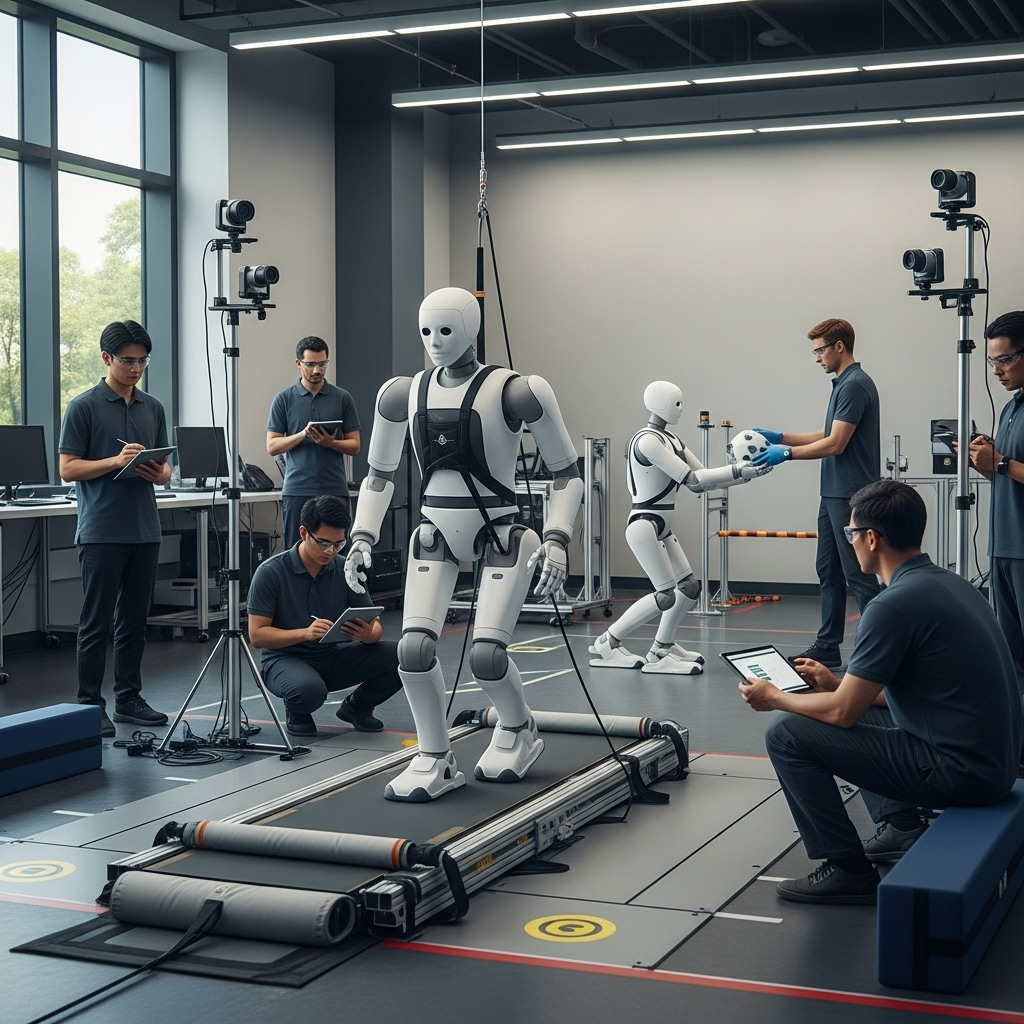
- Stability: Create measurable metrics, test methods, and safety requirements tailored to balance and locomotion. This includes modeling fall responses, assessing predictive risk, and setting performance benchmarks.
- Human‑robot interaction: Develop guidelines to ensure safe, trustworthy collaboration with human workers as deployment expands from labs to real‑world settings.
Why this matters
The group argues that consistent, harmonized guidance is essential for sustainable progress. Without shared definitions and tests, adoption may remain slow, uneven, and restricted to tightly controlled environments; with them, developers and operators can scale more reliably and safely.
How the findings were developed
The findings draw on a year of market analysis and interviews with vendors to pinpoint industry needs. The Humanoid Study Group launched in June with a mandate to produce a development roadmap for the sector.
What’s next
IEEE’s framework is intended to rally industry, academia, and regulators around common baselines—so prototypes can evolve into practical tools backed by clear expectations for performance and safety.