Microsoft inks $9.7B IREN deal for Nvidia AI chips


Microsoft inks $9.7B IREN deal for Nvidia AI chips

Microsoft signs a five-year, $9.7B deal with IREN for guaranteed access to Nvidia AI chips via Dell, easing compute bottlenecks; IREN shares surge over 20%.

At a glance

  • Deal size & term: $9.7B over five years
  • Partners: Microsoft, IREN (data centers), Dell (hardware supplier)
  • Chips: Nvidia GB300, supplied by Dell under a ~$5.8B order
  • Market reaction: IREN +20% pre-market; Dell +5%
  • Deployment: Phased through 2026 at IREN’s 750MW Childress, Texas campus
  • Capacity: IREN operates 2,910MW across North America, all renewable-powered
  • Safeguards: Microsoft can terminate if delivery timelines aren’t met

Overview

Microsoft has signed a five-year, $9.7 billion agreement with data-center operator IREN that guarantees access to advanced Nvidia processors, a move aimed at easing the company’s acute shortage of AI computing capacity. The news sent IREN shares up more than 20% in pre-market trading on Monday, while Dell gained about 5% as a key hardware supplier in the rollout.

How the deal works

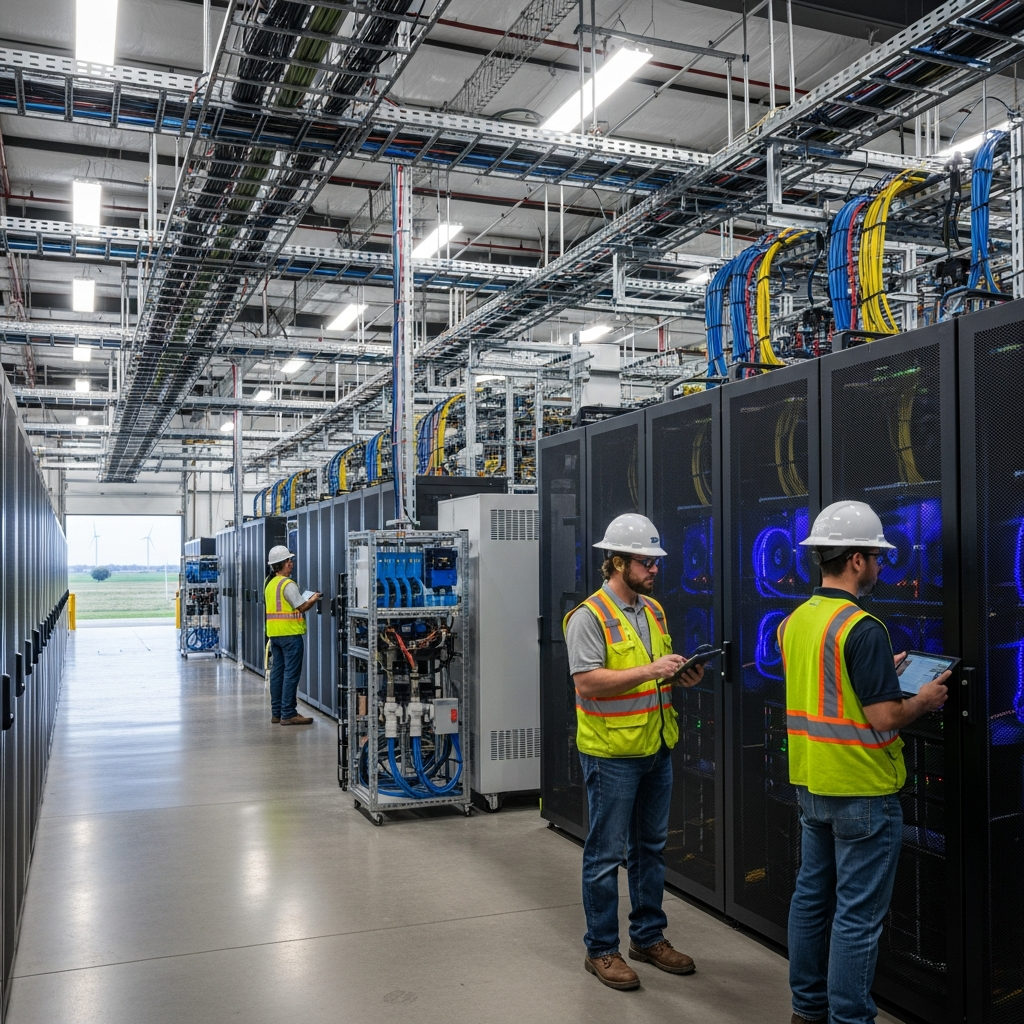
Under the deal, Microsoft will tap IREN’s infrastructure rather than build new facilities or secure additional power, accelerating access to high-performance AI compute while avoiding heavy upfront spending on chips that can quickly be superseded. Dell will supply IREN with Nvidia’s GB300 chips and related equipment under a contract worth roughly $5.8 billion, capacity that Microsoft will ultimately use.

IREN said in a regulatory filing that cash from Microsoft’s upfront payment will help finance part of the Dell order. The agreement includes a termination clause that allows Microsoft to exit if IREN fails to meet delivery timelines, underscoring the urgency around bringing new AI capacity online.

Why it matters

The partnership comes as demand for AI infrastructure surges across the tech sector, with recent earnings from major firms citing capacity constraints as a drag on growth. Microsoft has acknowledged those limits: CFO Amy Hood last week said the company now expects its AI compute crunch to persist until at least mid-2026, extending a prior expectation for relief by year-end.

Capacity and deployment

IREN’s footprint offers immediate scale. The company, whose market value stands at about $16.52 billion after its stock surged more than sixfold this year, operates multiple North American data centers with a combined 2,910 megawatts of capacity, all powered by renewable energy.

Nvidia processors for the deal will be deployed in phases through 2026 at IREN’s 750-megawatt campus in Childress, Texas. The site will add liquid-cooled data centers expected to deliver around 200 megawatts of critical IT capacity, expanding resources for training and running AI models.

Strategic implications

  • Speed to capacity: Bypasses long lead times for power and construction.
  • Financial flexibility: Reduces exposure to rapid chip depreciation cycles.
  • Risk controls: Delivery-linked termination clause keeps execution on track.

Market impact and outlook

By leveraging IREN and Dell, Microsoft aims to scale AI services more quickly and flexibly, while limiting exposure to rapid chip depreciation and the long lead times for power and construction. Execution now hinges on IREN meeting schedule commitments and bringing the Texas capacity online as planned.

Headline: Microsoft seals $9.7B IREN pact for Nvidia AI chips
 

Google unveils Project Suncatcher for space AI compute


Google unveils Project Suncatcher for space AI compute

Project Suncatcher targets AI compute in space

Overview

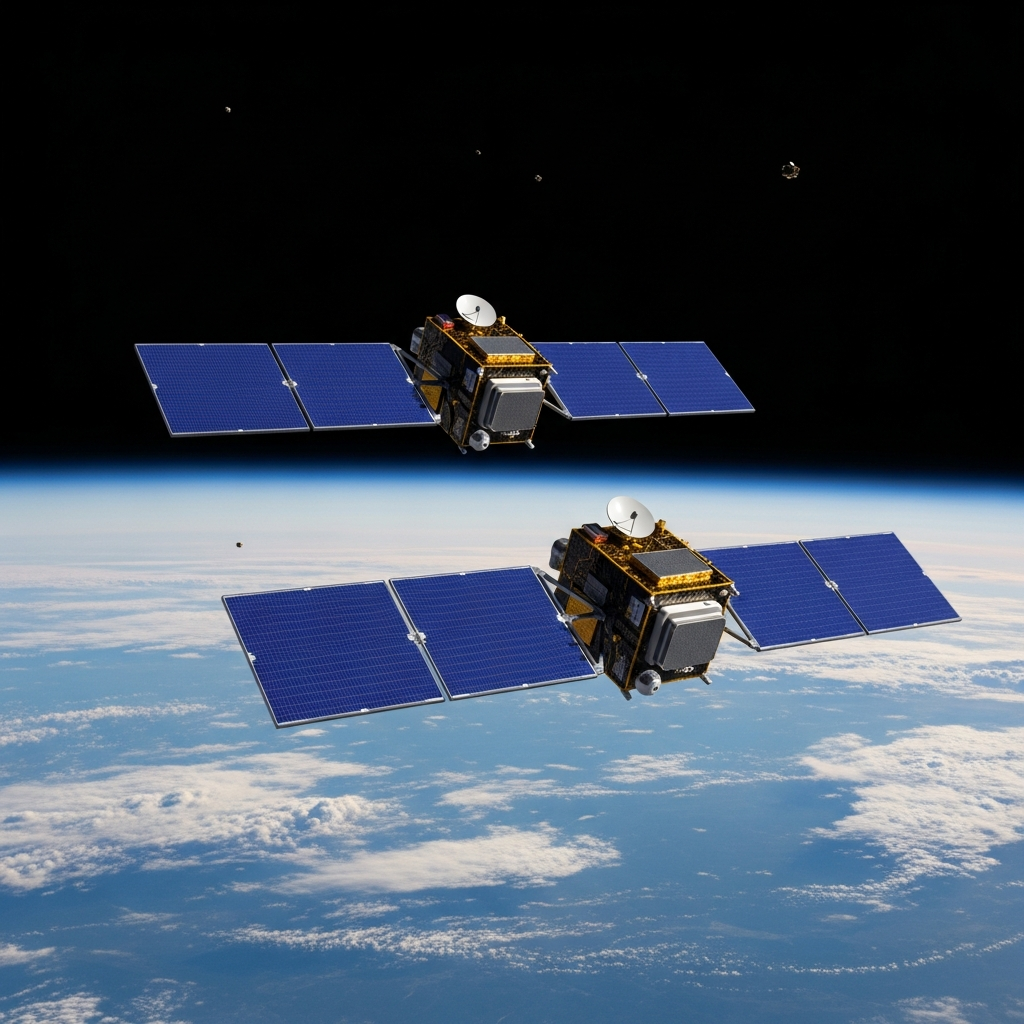
Google has unveiled Project Suncatcher, a long-term research push to explore running large-scale machine learning in space. The idea is to create an interconnected constellation of solar-powered satellites carrying Google Tensor Processing Unit (TPU) chips, tapping abundant sunlight to expand computing capacity beyond Earth.

Announcement and early research

Announced November 4, 2025 on Google’s The Keyword blog, the effort follows the company’s tradition of “moonshot” projects, such as autonomous vehicles and quantum computing. Google released an initial preprint that lays out early findings on satellite constellation architecture, attitude control, and communications, as well as results from radiation testing of TPU hardware.

Prototype mission with Planet

The next milestone is a learning mission with Planet, the Earth imaging company. The partners plan to launch two prototype satellites by early 2027 to test hardware in orbit and validate core assumptions about performance, resilience, and operations. Insights from this flight will inform whether space-based compute can one day complement terrestrial data centers by easing power constraints and scaling AI training and inference.

Why it matters

Google emphasizes that Suncatcher is exploratory research with significant engineering challenges ahead. Still, the company sees promise in off-planet solar energy and distributed satellite networks as a pathway to massively scalable, energy-rich computation in the future.

If the prototypes succeed, they could pave the way for subsequent missions and, eventually, a new layer of AI infrastructure in orbit.

At a glance

  • Project: Space-based ML using solar-powered satellites with Google TPU chips
  • Announced: November 4, 2025 (The Keyword)
  • Partner: Planet (Earth imaging company)
  • Next step: Two prototype satellites targeted by early 2027
  • Goal: Validate performance, resilience, and operations for space compute

Note: Project Suncatcher is an exploratory initiative; results from the prototype mission will guide future development.


How Amazon gains from $38B OpenAI AWS deal


How Amazon gains from $38B OpenAI AWS deal

OpenAI has signed a seven-year, $38 billion agreement with Amazon Web Services (AWS) to secure the cloud computing power it needs to scale its AI models. The arrangement begins immediately, with full planned capacity due by the end of 2026 and flexibility to expand from 2027 onward. It’s the company’s first major move since restructuring last week, which removed Microsoft’s first right of refusal on compute and opened the door to a multi‑cloud strategy.

By diversifying its infrastructure providers, OpenAI reduces reliance on a single partner and improves access to the massive, dependable compute required to train and serve cutting‑edge AI systems like ChatGPT. The shift marks a significant strategic turn toward resilience and growth at global scale.

What the deal includes

  • AWS will deploy hundreds of thousands of advanced AI chips, among them Nvidia’s GB200 and GB300 accelerators, in large data clusters purpose‑built for OpenAI’s workloads.
  • The capacity will support two critical needs: training the next generation of frontier models and powering real‑time responses for consumer and enterprise applications.
  • OpenAI starts using AWS now, with capacity ramping through 2026 and options to grow further after 2027.

Why it matters for Amazon

The contract serves as a high‑profile endorsement of AWS’s ability to deliver AI compute at scale, countering concerns that Amazon had fallen behind Microsoft and Google in the AI race. Analyst Paolo Pescatore of PP Foresight called it a major validation of AWS’s compute capabilities to meet OpenAI’s demanding requirements.

AWS has been building an AI platform around custom infrastructure and a portfolio of third‑party and open models available through Amazon Bedrock. The OpenAI deal strengthens AWS’s position as a go‑to backbone for large AI deployments.

OpenAI’s long‑term compute push

CEO Sam Altman has laid out an expansive vision for building the world’s AI infrastructure. He has said OpenAI aims to invest roughly $1.4 trillion to develop about 30 gigawatts of compute capacity, an energy draw comparable to powering around 25 million U.S. homes. The ambition is to eventually add 1 gigawatt per week, at a capital cost he has estimated at more than $40 billion per gigawatt. The AWS pact is a significant step toward securing the reliable compute needed for that roadmap.

Market reaction

Investors responded swiftly. Amazon shares climbed about 5% on Monday to a record high, adding nearly $140 billion in market value. Microsoft’s stock dipped briefly following the news. The market move underscores expectations that AWS will play a central role in supplying infrastructure to leading AI companies.

The bottom line

OpenAI’s $38 billion commitment anchors a multi‑cloud future and locks in massive compute to advance frontier AI. For Amazon, it is a marquee win that reinforces AWS as core infrastructure for AI development and deployment, signaling a new phase in the race to secure chips, power, and scale for next‑generation models.


Paytm teases AI features; Groq partnership announced


Paytm teases AI features; Groq partnership announced

Paytm teases new AI features ahead of Nov 6 reveal

Event
November 6, 3:30 PM IST

Paytm is gearing up to unveil new artificial intelligence features, with founder Vijay Shekhar Sharma hinting at what’s coming in a teaser shared on Thursday. The reveal is scheduled for November 6 at 3:30 PM.

What the teaser hints at

A promotional poster from the company suggests it will apply generative AI to make travel check-ins smoother. On X (formerly Twitter), Sharma wrote:

“We got something new tomorrow ! Check in here :).”

Specific capabilities weren’t disclosed.

AI in travel, the broader context

The teaser arrives as travel platforms increasingly lean on AI. Earlier this year, MakeMyTrip rolled out “Myra,” a virtual travel agent that assists with planning, bookings, cancellations, and refunds. It also introduced an AI-powered semantic search to find hotels and homestays using natural-language queries, reducing the need for multiple filters.

Groq partnership: faster, cost‑efficient AI at scale

Separately, Paytm announced a partnership with US-based Groq to bring faster and more cost‑effective AI to its platform. The company plans to use GroqCloud and Groq’s purpose-built Language Processing Unit (LPU) to speed up and scale AI inference compared to conventional GPU-based systems.

Where Paytm plans to apply it

  • Transaction processing
  • Risk assessment
  • Fraud detection
  • Customer engagement

Existing AI capabilities at Paytm

The fintech firm noted it already uses AI for:

  • Risk modeling
  • Fraud prevention
  • Customer onboarding
  • Personalization

What to watch

  • Feature reveal on November 6 at 3:30 PM
  • Details on generative AI for travel check-ins
  • How Groq’s LPU and GroqCloud integrate into Paytm’s stack

More details on the new features are expected at the November 6 event.