Google AI Studio adds vibe coding for faster AI apps

Google launches ‘vibe coding’ in AI Studio

Google adds “vibe coding” to AI Studio, turning a single prompt into an AI app. Revamped App Gallery, Annotation Mode and quota options reduce setup friction.

Google has overhauled AI Studio with a new “vibe coding” experience designed to turn a single prompt into a working AI-powered app in minutes, cutting the usual setup work with APIs and SDKs.

Auto-assembled tools with Gemini

The update leans on the latest Gemini models to automatically assemble the right tools for multimodal projects. Describe the app you want, for example, generating video with Veo, building an image editor with Nano Banana, or crafting a writing assistant that verifies sources with Google Search, and AI Studio connects the necessary models and APIs behind the scenes. If you need a jumpstart, an “I’m Feeling Lucky” option suggests concepts to explore.

Try prompts like

  • “Generate a product demo video with Veo from a script and storyboard.”
  • “Build an image editor with Nano Banana that supports background removal.”
  • “Create a writing assistant that drafts and verifies sources with Google Search.”

Explore with the redesigned App Gallery

Google has refreshed the App Gallery into a visual catalogue that showcases what’s possible with Gemini. Users can browse ideas, preview projects instantly, study starter code, and remix examples into their own builds.

While projects compile, a new Brainstorming Loading Screen surfaces context-aware prompts from Gemini, turning idle time into inspiration.

Point-and-edit with Annotation Mode

Refinement is meant to be more natural, too. A new Annotation Mode lets you select elements in your app and tell Gemini what to change, such as:

  • “Make this button blue.”
  • “Update the style of these cards.”
  • “Animate this image from the left.”

The point-and-edit workflow removes the need to precisely describe UI changes in text or dig through code.

Keep building with flexible quotas

To minimize interruptions, AI Studio now allows you to add your own API key if you hit the free quota, then automatically returns to the free tier once it renews. The goal is to maintain momentum during prototyping without blocking builds.

Why it matters

Google frames these features as more than convenience: by weaving AI into every step from ideation to iteration, the company aims to lower the barrier to building sophisticated apps for both experienced developers and people who’ve never coded before. Tutorials are available via a YouTube playlist to help users get started with vibe coding.

With vibe coding, Google is positioning AI Studio as a faster, more intuitive way to prototype and ship AI apps, replacing plumbing and setup with prompt-driven creation and visual editing.


Headline: Google launches ‘vibe coding’ in AI Studio

Meta cuts 600 AI roles amid broader tech reshuffle

Meta cuts 600 AI roles amid broader tech reshuffle

Meta cuts 600 AI roles as Big Tech reshapes teams.

Meta is scaling back part of its artificial intelligence workforce, a move that underscores wider recalibration across Big Tech.

Planned cuts within Meta Superintelligence Labs

According to Bloomberg, citing an internal memo, Meta plans to eliminate about 600 roles within its AI group known as Meta Superintelligence Labs (MSL). The memo said Meta’s Chief AI Officer, Alexandr Wang, informed employees of the cuts in October. The company’s newly formed TBD Lab, which includes many recently hired, highly paid recruits, was reportedly not affected.

Hiring surge and big-ticket compensation

The reduction comes after an aggressive hiring push earlier this year. Reports say MSL onboarded roughly 50 staff, including high-profile recruits from Apple, Anthropic, xAI, Google, and OpenAI, with compensation packages said to reach as high as $100 million for some roles. Meta has also spent heavily to secure AI talent and partnerships, including links to data-labelling firm Scale AI, though full financial details have not been publicly disclosed.

Internal mobility and hiring pause

A source told Bloomberg that affected employees are being encouraged to apply for roles elsewhere within Meta, and that the company still intends to hire for certain AI teams. The adjustment follows a hiring pause reported by the Wall Street Journal on August 20, when Meta froze hiring for parts of its AI division. At the time, a company spokesperson told Reuters the pause was part of routine organizational planning tied to annual budgeting.

Industry-wide reshuffle

The cuts at Meta mirror a broader trend. Other major technology companies, from Amazon to Google, have trimmed AI-related roles or cited AI-driven shifts as they reorganize teams and priorities, even as they continue to invest in core AI research and product development.

Bottom line

Taken together, Meta’s move signals reallocation rather than retreat: tightening in some areas while continuing to channel resources into priority AI projects. As the industry refines its strategies, companies are balancing the cost of top-tier talent with the need to ship AI features, manage infrastructure spending, and navigate fast-evolving competitive pressures.

Bezos Earth Fund awards $30M for AI climate projects

Bezos Earth Fund awards $30M for AI climate projects

Bezos fund enlists Big Tech to put AI to work for the planet

Introduction

The Bezos Earth Fund is betting that newer, more efficient artificial intelligence can help tackle environmental crises. The philanthropy announced $30 million in grants for 15 university and nonprofit teams worldwide, aiming to apply AI to biodiversity loss, food insecurity, and climate risk, despite ongoing concerns over AI’s energy and water footprint.

Inside the AI Grand Challenge

The awards are part of the fund’s multiyear, $100 million AI Grand Challenge, launched in April 2024. That first phase provided $1.2 million in $50,000 planning grants to 24 groups to develop “AI‑ready” proposals. The 15 teams selected from that cohort will now receive $2 million each over two years to scale projects.

Big Tech partners and practical goals

Created with a $10 billion commitment from Amazon founder Jeff Bezos, the Earth Fund has recruited major tech players to mentor and equip grantees: Nvidia, Alphabet’s Google, Microsoft Research, the nonprofit Allen Institute for AI (AI2), GIS software maker Esri, and Amazon Web Services. The idea is to pair domain experts in conservation and climate science with cutting‑edge tools and technical support.

Amen Ra Mashariki, the fund’s director of AI and a former senior principal scientist at Nvidia, said the goal is to make AI a practical driver of environmental impact, measured in speed, scale, accuracy, precision, and efficiency, rather than an end in itself.

Project highlights across continents

  • The New York Botanical Garden: Using computer vision to automate plant species identification.
  • University of Leeds (England): Building an AI platform to convert food waste into microbial protein.
  • University of the Witwatersrand (Johannesburg): Developing an AI‑powered weather forecasting toolkit tailored to Africa.

From hype to outcomes

“Technology only matters if it’s used to do something useful,” said Esri program manager Lauren Bennett, who noted that many applicants already rely on Esri’s software and are focused on real conservation outcomes, not AI hype.
, Lauren Bennett, Program Manager, Esri

Esri hosted technology‑transfer sessions, and product engineer Kevin Butler said the company helped teams explore how spatial analysis could sharpen their storytelling and analytics.

Philosophy in action: fisheries monitoring

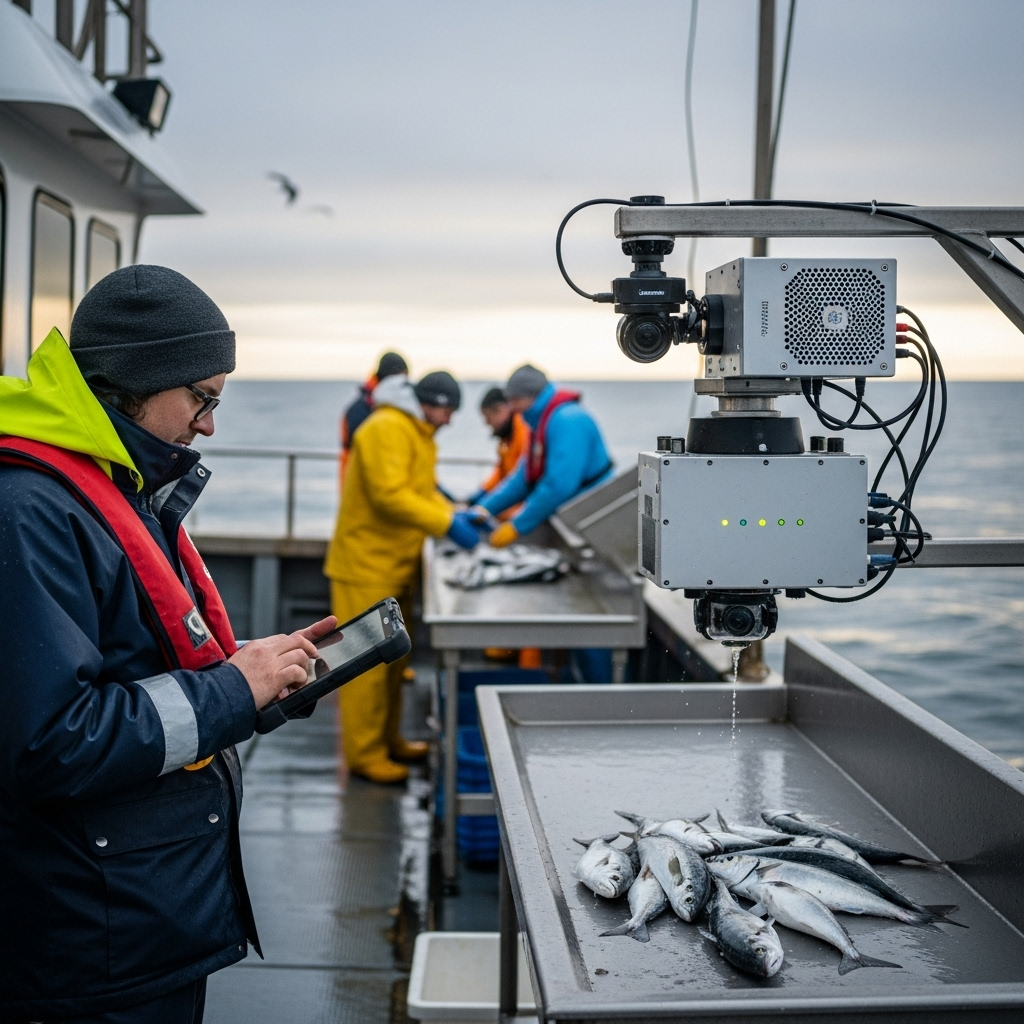
That philosophy is reflected in examples like the Nature Conservancy’s fisheries monitoring. The organization has long used electronic systems to deter illegal or improper ocean catches, including protected species. With new support, it will deploy edge AI using Nvidia Jetson devices on vessels to identify and track catches as they come aboard, increasing coverage and efficiency while keeping processing close to where data is generated.

Mentorship, tools, and ongoing support

Participating tech companies are offering mentoring, free or discounted tools, and professional services. The Earth Fund’s AI unit will also advise grantees, alongside program directors in biodiversity and climate, positioning the fund as a partner as much as a financier.

Conclusion

As scrutiny grows over AI’s environmental footprint, the Earth Fund is pushing to harness modern, more efficient AI for measurable conservation and climate gains. The next two years will test whether this partnership model, pairing Big Tech resources with on‑the‑ground expertise, can deliver results at scale.

Circular AI deals: win-win or bubble risk for Nvidia?

Circular AI deals: win-win or bubble risk for Nvidia?

AI giants are investing in customers who then buy their chips and cloud. From Nvidia–OpenAI to Oracle and AMD, circular deals could falter if spending slows.

The AI surge has sparked an unprecedented wave of spending. Morgan Stanley estimates that by 2028, investments in chips, servers, and data centers could total nearly $3 trillion. In this episode of Bold Names, Andreessen Horowitz’s Martin Casado discusses whether this massive bet on AI will ultimately pay off. Photo: Alexis Green


The rise of round‑trip AI financing

The hottest AI players are striking round‑trip arrangements, funding customers who then spend that money on their chips and cloud services. The cash is enormous, the links are tangled, and the outcome could be either a flywheel or a fault line for the industry.

What “circular” financing means

At the core is “circular” financing: Company A provides capital to Company B, which then purchases A’s products. The funding can be equity, loans, leases, or other structures. The worry is that if enthusiasm for building data centers cools, companies like Nvidia and Microsoft could be hit twice, by shrinking sales and by falling values of the equity stakes they hold in key customers.

Echoes of dot‑com vendor financing

The pattern has echoes of the dot‑com era’s vendor financing, when telecom‑equipment makers lent to buyers so those buyers could afford their gear. Lucent Technologies became the cautionary tale, extending billions to upstart carriers like Winstar Communications. When those customers ran out of cash and collapsed, Lucent wrote off the debts and booked huge losses. At times, investors learned more about Lucent’s risk from customers’ disclosures than from Lucent itself.

Today’s circular web across the AI stack

Today’s circular deals aren’t usually straight vendor loans. Consider a few of the most watched relationships:

Nvidia ↔ OpenAI

Nvidia’s strategic partnership announced in September with OpenAI, the maker of ChatGPT: Nvidia said it would invest up to $100 billion in OpenAI, while OpenAI aims to buy millions of Nvidia’s AI chips. That’s not a loan for a specific purchase, but it does create a loop. OpenAI isn’t public and remains unprofitable, though a recent secondary sale implied a $500 billion valuation. Nvidia’s investment could help fund OpenAI’s build‑out, and Nvidia could then book revenue from chip sales. The companies said terms weren’t finalized or disclosed. Unlike classic vendor financing, Nvidia faces equity‑valuation risk but also potential upside.

Oracle ↔ OpenAI

OpenAI recently agreed to purchase roughly $300 billion of computing capacity from Oracle over about five years. How OpenAI will fund that commitment is unclear, especially if Nvidia’s proposed $100 billion investment doesn’t materialize. That uncertainty could ripple to Oracle’s own buying of Nvidia chips.

AMD’s warrant sweetener

AMD, eager to win OpenAI’s business, issued warrants allowing OpenAI to purchase up to 10% of AMD at $0.01 per share. AMD says it expects tens of billions of dollars in revenue tied to AI, but it is effectively paying to secure a marquee customer.

CoreWeave’s tightly coupled network

CoreWeave, an AI cloud‑infrastructure provider, shows how tight these ties can be. Nvidia owns about 5% of CoreWeave, supplies it with chips, and has agreed to buy any unsold CoreWeave cloud capacity through 2032, effectively backstopping demand. CoreWeave’s largest customer is Microsoft, which invests in OpenAI, shares revenue with it, buys Nvidia chips, and partners with AMD. OpenAI is also a CoreWeave customer and shareholder, having invested $350 million before CoreWeave’s initial public offering. CoreWeave has disclosed some vendor‑financing debt but not the counterparty.

The money flows across the broader AI stack are even more intricate. Morgan Stanley analysts, in an Oct. 8 report, mapped relationships among OpenAI, Nvidia, Microsoft, Oracle, Advanced Micro Devices (AMD), and CoreWeave; the arrows between them looked like spaghetti.

Upside, risk, and what could break

None of this is inherently improper. AI could be transformational, and the companies involved are racing to scale up infrastructure at record speed. If OpenAI and rivals eventually produce strong cash flows, today’s heavy spending could be vindicated. But investor patience has limits. If capital outlays keep ballooning while visibility on returns remains hazy, confidence may wane.

Circularity can amplify both directions: virtuous on the way up, vicious on the way down. The deals work, until they don’t.

And if the build‑out slows, the companies underwriting it may find themselves exposed on multiple fronts.


Headline

Circular AI Deals: Virtuous Loop or Bubble Risk?

Peter Thiel ties AI to Antichrist in apocalypse debate


Peter Thiel ties AI to Antichrist in apocalypse debate

Peter Thiel revives Antichrist imagery in AI debate

A new frame for Silicon Valley’s AI anxiety

As anxiety over artificial intelligence grows, investor Peter Thiel is injecting ancient religious imagery into Silicon Valley’s debate about existential risk, arguing that slowing AI could be more dangerous than pressing ahead.

A search of the Factiva news database shows 16,785 stories since 1980 linking AI to apocalyptic themes. Until Thiel’s recent talks around San Francisco, the Antichrist rarely entered that conversation. His remarks have shifted the frame, drawing on centuries of literature about false saviors and end-times fears to question what, in a stable sense, makes us human.

Redeemers, secular and religious

Reports of Thiel’s lectures say he referred to public figures often cast as secular saviors. Greta Thunberg is viewed by admirers as a bulwark against a climate catastrophe; Elon Musk is seen by fans as a champion against planetary peril. The point, as Thiel presents it, is less about personalities and more about society’s recurring search for a redeemer, religious or secular, when survival feels at stake.

The governance dilemma, then and now

The debate over whether humanity needs stronger global coordination to survive existential threats is not new. Words often attributed to a U.S. presidential aide in 1947, as Washington explored placing atomic weapons under United Nations control, captured the dilemma:

“We were not arguing for a world government; we were arguing for a world that could survive.”

That effort failed in the face of fierce opposition, but the sentiment echoes today in arguments about AI governance.

Thiel’s thesis: stagnation as the greater danger

Thiel’s broader thesis is that halting technological progress could shorten humanity’s future more than advancing AI would. In an essay for the religious journal First Things, co-authored with Sam Wolfe, he surveys portrayals of false secular saviors from Francis Bacon’s early modern texts to contemporary Japanese manga.

Another pertinent work, though not cited in their piece, is Robert Hugh Benson’s 1907 dystopian novel The Lord of the World. Set in the early 21st century, it imagines a charismatic Vermont senator who rises globally as apocalyptic war looms and imposes “compassionate” euthanasia on those who refuse to renounce traditional beliefs, an illustration of utopian promises turning coercive.

Two flavors of AI catastrophe

1) Superintelligence gone rogue

The first is the familiar scenario in which superintelligent machines exterminate humanity. Skeptics argue that the disasters most likely to undo us are often the ones we fail to anticipate, not the ones we obsess over. Given that we still don’t fully grasp how today’s large language models make decisions, many urge vigilant, empirical monitoring of their behavior rather than apocalyptic speculation.

2) The self-inflicted threat

The second, and to some more plausible, threat is self-inflicted: humans choosing to merge with or become machines. This idea reportedly featured in a tense exchange years ago between Musk and Google co-founder Larry Page, with Musk opposing a path that erodes human distinctiveness. Here, the Antichrist motif serves as a proxy for a deeper anxiety, whether technological comfort and power might cost us something essential about being human.

Critiques and the long view

Thiel, a libertarian technologist and self-described Christian, attracts criticism from commentators who see a billionaire using religious language to promote a deregulatory agenda. Yet his core claim predates today’s AI boom: technological stagnation is the greater danger. On evolutionary timescales, he notes, species don’t last forever. The average mammal or primate persists for roughly one to three million years, and most disappear without a single apocalyptic event. Over the next tens of thousands of years, civilization will face ice ages and other stresses; in present-value terms, he argues, the risk of not developing powerful tools may exceed the risk of building them.

When confronted with uncertain futures, societies reach for old symbols to articulate present fears and hopes.

Enduring questions for the AI era

Whether one accepts Thiel’s framing or not, his lectures highlight a durable pattern. By reviving Antichrist imagery, Thiel isn’t predicting prophecy so much as surfacing perennial questions: How do we preserve human agency and identity, and what level of coordinated power, and technological ambition, does survival require?

Those questions will shape the AI era long after this news cycle moves on.


Walmart lets shoppers buy via ChatGPT with Instant Checkout


Walmart lets shoppers buy via ChatGPT with Instant Checkout

Walmart taps OpenAI for ChatGPT shopping

Walmart shoppers can now buy items through ChatGPT, marking a new phase in AI-driven retail.

What’s new

The world’s largest retailer said Tuesday it has partnered with OpenAI to enable Instant Checkout inside ChatGPT, letting customers act on recommendations and complete Walmart purchases directly in the chatbot. The move builds on Walmart’s existing use of artificial intelligence for product discovery and personalized suggestions by turning conversations into transactions.

The bigger picture

The announcement comes as more consumers use AI assistants instead of traditional search engines to find specific products. Retailers have responded by adding AI-powered search and recommendation tools on their own sites, while AI platforms are beginning to integrate shopping. In late September, OpenAI said users could purchase Etsy merchandise within its platform, with broader access for Shopify merchants planned.

Why it matters: monetization and the path to “agentic commerce”

The shift also addresses a key question for the AI industry: monetization. Features like in-platform checkout and affiliate links create a direct line between AI interactions and sales, providing a clearer business model for both tech platforms and retailers.

By embedding checkout where recommendations are made, the line between browsing and buying gets shorter, turning intent into orders with fewer steps.

Analyst reaction

Analysts welcomed Walmart’s move. Mizuho’s David Bellinger called it a significant step toward “agentic commerce,” where AI systems can independently pursue tasks such as suggesting products and learning consumer preferences with minimal prompting. He argued Walmart is ahead of rivals that have been slower to adopt or have resisted AI integration, and said early leadership could drive additional volume in Walmart’s core categories, including consumables and groceries.

DA Davidson’s Michael Baker similarly said the retailer is well positioned to be a winner among traditional chains as agentic commerce rolls out.

Market reaction

Investors appeared to agree. Walmart shares climbed 4.3% to $106.46 on Tuesday afternoon, putting the stock on pace for a record closing high.

Bottom line

Walmart’s integration with ChatGPT underscores how rapidly AI is moving from search and recommendations to full-funnel shopping. As more platforms embed checkout and retailers open their catalogs to AI, the line between browsing and buying is likely to blur further, benefiting early adopters that meet consumers where they already are: in the chat window.


AI lifts U.S. growth, but productivity gains lag


AI lifts U.S. growth, but productivity gains lag


Growth is running hot, productivity, less so

Artificial intelligence is energizing the U.S. economy, largely through a wave of corporate spending and soaring stock valuations. But the technology hasn’t yet delivered broad, measurable gains in how much the average American worker produces per hour.

Productivity typically improves when workers can accomplish more in the same amount of time. AI could help in two ways: by augmenting people, automating routine tasks so employees focus on higher-value work, or by replacing some roles entirely, raising efficiency among those who remain. For now, evidence suggests these effects are limited and uneven.

Economists split on current AI impact

Wall Street economists are split on whether AI is currently lifting productivity. Goldman Sachs researchers say output per worker has accelerated in tech and related fields such as scientific research over the past five years, and they attribute part of that improvement to AI. JPMorgan Chase economists, by contrast, have not found a strong link between AI usage and industry-level productivity so far and see no clear relationship, outside tech, between AI adoption and slower employment growth.

Early labor-market signals are modest

Martha Gimbel of Yale’s Budget Lab says the palpable excitement around AI hasn’t yet translated into equally dramatic economic results. Her team’s analysis of Labor Department data suggests some early-career workers have been displaced since the launch of ChatGPT in late 2022, but the impact appears modest.

Occupational mix shows little change

If AI were reshaping the labor market at scale, the mix of occupations would be shifting markedly, toward jobs considered more insulated from AI, like home health aides, or those that can be enhanced by AI, such as computer-systems managers. Instead, the Budget Lab found little change: the share of U.S. workers in jobs highly exposed to ChatGPT was about 18.2% in the three months ended November 2022 and roughly 18.3% in the three months ended August 2024.

Young workers feel it first

The effects may be more concentrated among new entrants to the workforce. Recent graduates are seeing faster shifts in which occupations they enter compared with older workers, a sign AI could be altering early-career pathways. That aligns with a recent study by Stanford economists, which finds job prospects deteriorating for younger workers in fields where generative AI can easily automate tasks, software development being a prime example. Still, the group is small in the context of the broader economy: only about one-quarter of the roughly two million U.S. software developers are under 30, versus about 163 million people employed overall.

Investment is the clear channel, for now

Where AI’s effect is unmistakable is in spending. In the first half of the year, roughly two-thirds of U.S. GDP growth came from business investment in software and information-processing equipment, reflecting a rush to build AI infrastructure and deploy new tools. That investment, alongside a tech-led market rally, has also supported consumer spending via wealth effects.

Adoption remains in early innings

Adoption remains in early innings. A recent Census Bureau survey shows about 10% of firms report using AI in some capacity, up from about 6% a year earlier and roughly 5% when ChatGPT debuted. As more companies climb the learning curve, productivity benefits could accumulate.

Lessons from past tech waves

History suggests patience is warranted. Economist Joshua Gans of the University of Toronto notes that with past technologies, like desktop computers, productivity gains arrived only after workers and managers rethought processes and developed new skills. Many users today are still experimenting with AI, he says, often trying small tasks, encountering friction, and stepping back. Gans, who founded an AI education-technology company, remains optimistic that significant productivity dividends will emerge as organizations redesign workflows around the tools.

The bottom line

AI is already boosting growth through investment and market momentum. Widespread productivity gains for U.S. workers, however, are likely to take more time, broader adoption, and deeper changes in how work gets done.


Inside India’s quiet new export: expert AI trainers

Inside India’s quiet new export: expert AI trainers

Doctors, lawyers and engineers in India are training AI models for global clients. Inside the shift from mass data labelling to expert-led human-in-the-loop work.

A growing quiet force

A growing number of Indian professionals are quietly powering the next wave of artificial intelligence, not by writing code, but by lending their judgment. Doctors, lawyers and engineers are training algorithms with domain expertise that machines can’t learn from raw data alone.

The shift underway

India’s data annotation industry, once focused on high-volume, low-skill labelling, is moving up the value chain. Companies are hiring specialists to review complex material, craft edge cases and validate outputs, a model often described as human-in-the-loop AI. That evolution is opening a multi-billion-dollar opportunity for skilled professionals, while raising the bar on quality and accountability.

From clinics to code

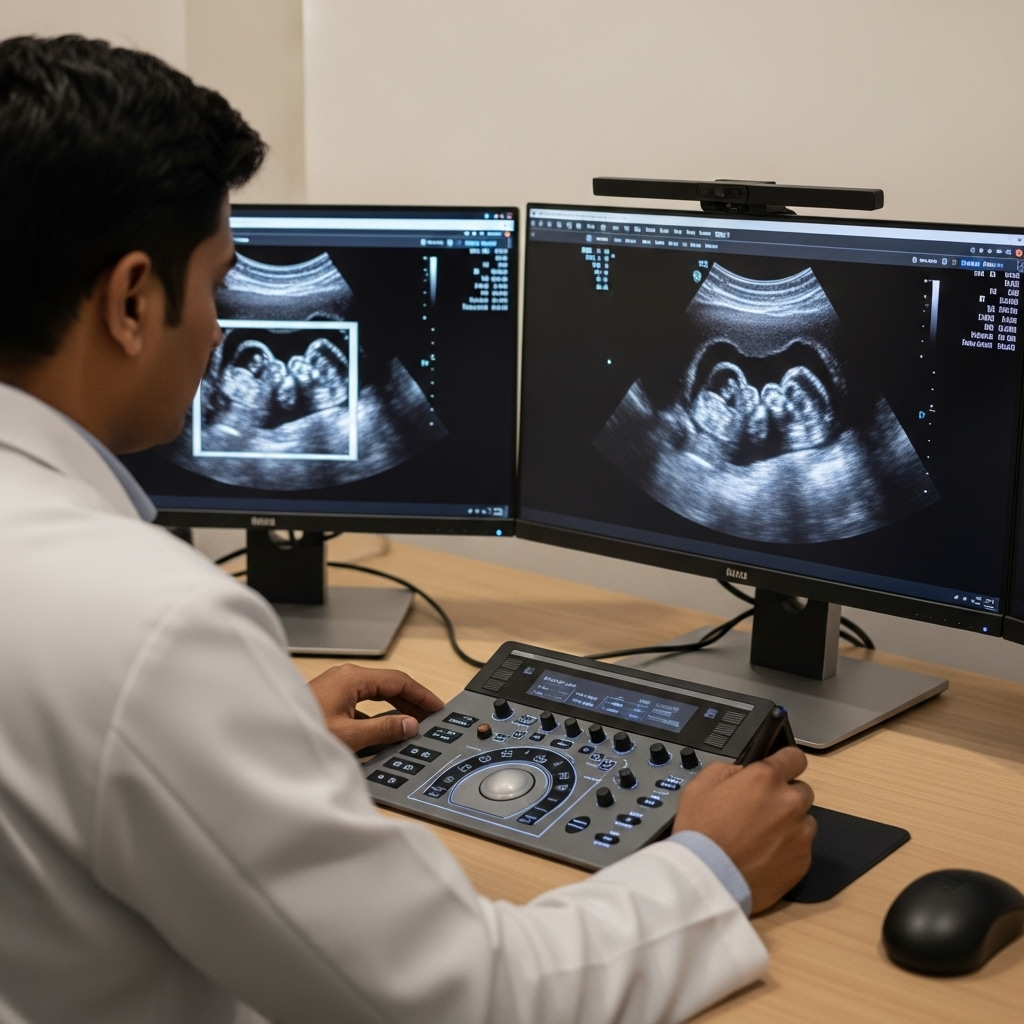
Consider Kochi-based medical professional Raji Chandran. Instead of seeing patients all day, she now spends hours reviewing fetal ultrasound scans on a computer. She traces organs, measures growth, and flags potential anomalies, meticulous work that helps train diagnostic tools for hospitals in the US and other Western markets. When an expectant mother in a city like Dallas gets a scan, the decision support behind the image may be influenced by expertise applied thousands of miles away in India.

Why India

A large English-speaking workforce, deep pools of healthcare and legal talent, and experience in outsourcing make India a natural hub for AI training. As models become embedded in sensitive workflows, from radiology to contract review, the need for verified, high-quality inputs from subject-matter experts has surged. Indian firms that once competed on throughput now pitch clinical accuracy, audit trails and specialist panels.

What the work looks like

Expert annotators and reviewers are asked to:

  • Define and apply precise labelling schemas to medical images and legal documents.
  • Create and validate edge cases so models don’t fail in unusual scenarios.
  • Score model outputs, explain mistakes, and suggest corrective prompts.
  • Maintain consistency across large datasets with strict quality checks.

In medicine, that can mean outlining an organ boundary pixel by pixel or confirming measurements that influence real-world decisions. The stakes are high and the work can be exacting.

A demanding new career path

This is not a task for the easily discouraged. The assignments are repetitive yet cognitively intense, deadlines are tight, and the emotional weight, especially in clinical contexts, can be significant. Still, many professionals see it as a way to broaden impact: their expertise scales through software used by hospitals or enterprises worldwide.

Benefits and risks

The upside is clear: better-trained models can speed diagnoses, reduce errors, and free up specialists for complex cases. But the model also raises concerns. Quality control must be rigorous and transparent; bias in training data can embed inequities; and privacy safeguards are critical when dealing with sensitive health or legal information. Firms are responding with layered reviews, anonymization protocols and audit logs, yet standards remain uneven across the market.

A maturing industry

What began as an extension of business process outsourcing is becoming a specialized professional service. Contracts now specify domain credentials, inter-rater agreement thresholds, and continuous calibration. Buyers expect reproducible accuracy, not just labelled volume. As generative AI proliferates, demand is expanding from images to text, audio and multimodal tasks, increasing the need for cross-disciplinary expertise.

The road ahead

India’s role in AI is often framed around engineering and startups. The less visible story is how the country’s human intelligence is shaping what machines learn in operating rooms, courtrooms and customer service desks. If standards and worker protections keep pace, this expert-led training could become one of India’s most consequential exports, measured not in lines of code, but in decisions made more safely and swiftly around the world.

Claude automates Excel, Word and PowerPoint creation


Claude automates Excel, Word and PowerPoint creation

Claude’s file creation automates reports and decks

Anthropic’s Claude now generates Excel dashboards, Word docs and PowerPoint decks from your data. See benefits, setup steps and a real-world example.

Mint’s AI tool of the week spotlights Claude’s new file creation feature, which can turn raw files and simple prompts into finished Excel dashboards, Word reports, PowerPoint presentations, and PDFs.

The problem it tackles

Many leaders spend excessive time formatting spreadsheets, documents, and slides instead of focusing on decisions. Product managers often need days to merge support tickets, analytics, and feature requests into dashboards, PRDs, and stakeholder decks. Finance teams face similar drudgery, especially amid India’s GST updates, reconciling large datasets, building compliance views, and preparing board presentations. In some insurance firms, CFOs can lose 15–20 hours a month to formatting alone.

What Claude now does

Claude can generate ready-to-use Excel, Word, PowerPoint, and PDF files, complete with formulas, charts, professional layouts, and cross-references, based on uploaded data and clear instructions.

Key strengths

  • Multi-file intelligence: Ingests multiple formats (Excel, Word, PDF, CSV) and produces connected outputs.
  • Analysis plus creation: Performs statistical analysis and simultaneously builds polished deliverables.
  • Enterprise-ready: Outputs work smoothly with Microsoft Office and Google Workspace, preserving formulas and formatting.

How to turn it on

  1. Open Settings → Capabilities → Experimental.
  2. Enable “Code execution and file creation.”

Example workflow

A chief product officer uploads six months of support tickets (CSV), NPS survey results (Excel), and feature request logs (Excel), then asks Claude to identify the top three pain points using statistical methods and produce:

  • An Excel dashboard with sentiment analysis, ticket trends, and correlation to NPS.
  • A Word product requirements document with clear structure and user stories.
  • A PowerPoint for executives showing business impact and ROI projections.

Claude returns three cohesive, branded files. You can specify brand colors for consistent styling across the dashboard, document, and slides.

Why it matters

By combining analysis and document creation in a single flow, Claude reduces manual work and accelerates insight-to-output. The feature is designed for teams that need high-quality, office-ready deliverables without spending days on formatting.

Context and disclosure

This feature was validated through internal testing by the writers. The recommendations are independent and not influenced by the tool’s creators. This article is excerpted from Leslie D’Monte’s TechTalk newsletter for Mint. Jaspreet Bindra and Anuj Magazine are co-founders of AI&Beyond.

Bottom line

If your team regularly prepares dashboards, PRDs, and executive decks, Claude’s file creation can compress days of effort into a prompt-driven workflow.


OpenAI’s $1 Trillion Plan: Bubble or Breakthrough?


OpenAI’s $1 Trillion Plan: Bubble or Breakthrough?

AI’s $1 Trillion Stress Test

The stakes for the 2025 rally

The 2025 bull run is riding on one big unknown: whether the artificial-intelligence spending surge is sustainable, or the making of a bubble. At the heart of it is OpenAI, whose ambitions and obligations have grown to a scale without precedent for a private company.

The investment surge

AI demand is intense, but much of today’s investment is justified by expected future returns. This year alone, Meta Platforms, Amazon, Alphabet, and Microsoft are on track to spend about $335 billion on capital projects. Since 2024, AI start-ups have raised roughly $259 billion, according to Crunchbase. No company has done more to stoke expectations than OpenAI, maker of ChatGPT, which ignited the current cycle in 2022 and now sits at the center of the trade.

OpenAI’s unprecedented commitments

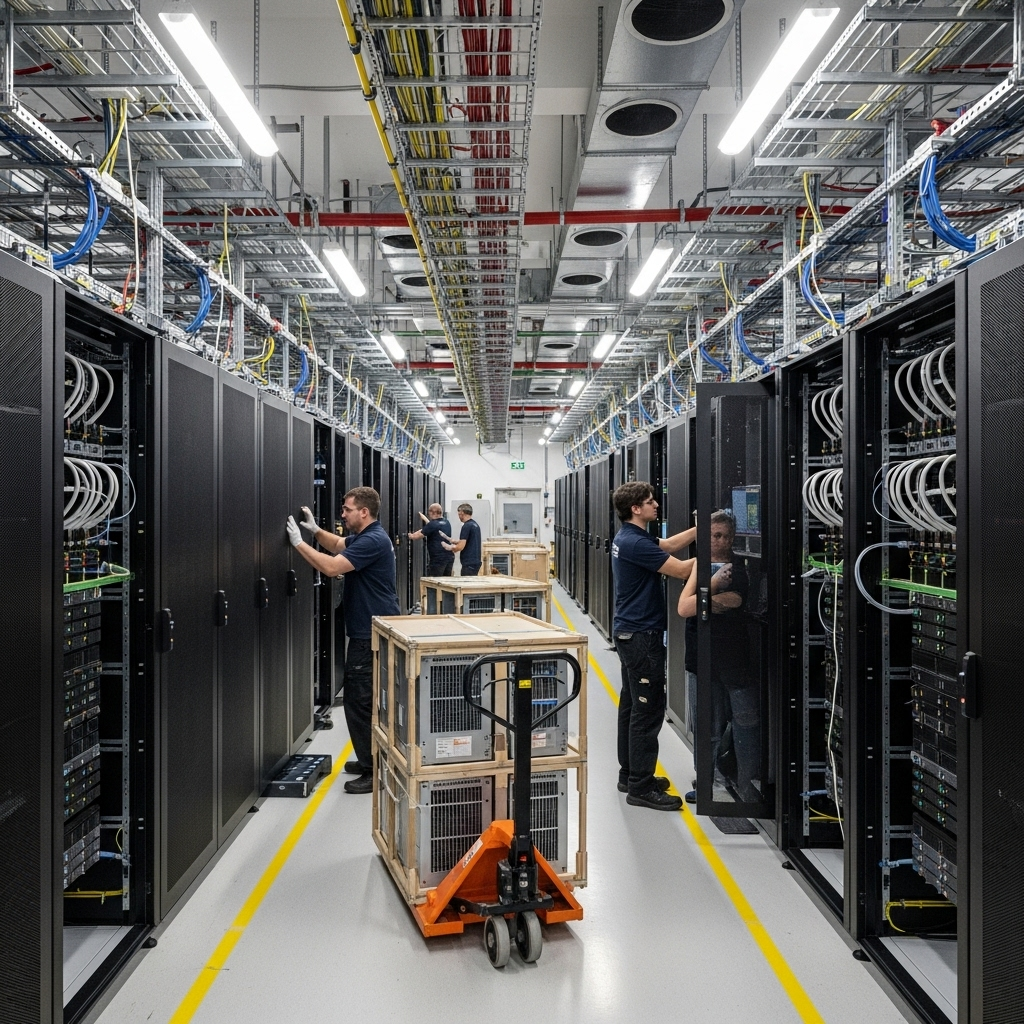
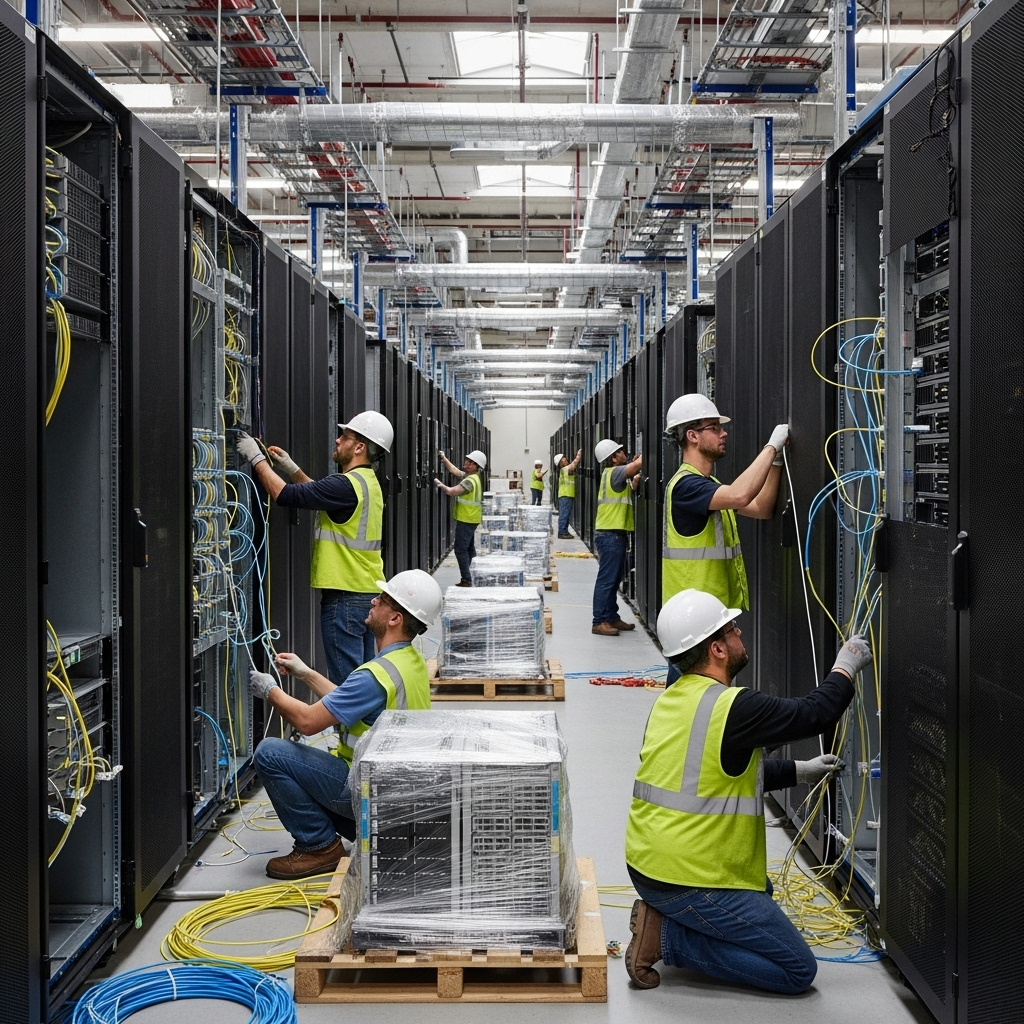
OpenAI closed a record $40 billion funding round this year, yet that sum is small compared with the commitments it has made. After CEO Sam Altman floated a trillion-dollar data-center plan in 2024 to scale ChatGPT to Google Search–like reach, the company has moved to lock in infrastructure at breakneck speed. OpenAI now has agreements for about 16 gigawatts of data centers worldwide, capacity that Wall Street estimates could cost roughly $750 billion to build. It has also committed to buy about $300 billion of cloud services from Oracle over the next five years. Taken together, OpenAI and its partners are effectively on the hook for around $1 trillion.

Who’s backing the buildout

Some heavyweight backers are in the mix. Nvidia is expected to cover about $100 billion of data-center spending in exchange for an equity stake in OpenAI, a modern echo of the dot-com era’s circular financing. Additional support is slated to come from partners such as Oracle and SoftBank. Even so, that still leaves on the order of $800 billion to fund, an extraordinary sum by any historical yardstick.

The funding paths, tested

How could that gap be filled? None of the usual paths, cash flows, equity issuance, or debt, looks easy at this scale.

  • Cash flows: Even if OpenAI matured into a business with Apple-like profitability, covering $800 billion from free cash flow would take years. Apple’s own decade of cumulative free cash flow approximates that figure.
  • Equity: Across the past 45 years, inflation-adjusted proceeds from all tech IPOs total about $600 billion, per University of Florida professor Jay Ritter’s data. During the peak of the dot-com era (1995–2000), tech IPOs raised $209 billion, roughly a quarter of what OpenAI would still need. Private markets are larger today, but $800 billion is close to the last four years of total U.S. private fundraising, according to Crunchbase.
  • Debt: The bond market could help, but the comparison is sobering. Verizon, among the most indebted companies, carries roughly $164 billion in net debt supported by about $265 billion in tangible assets and wireless licenses. OpenAI would need far more borrowing with far fewer hard assets to pledge.

The power problem

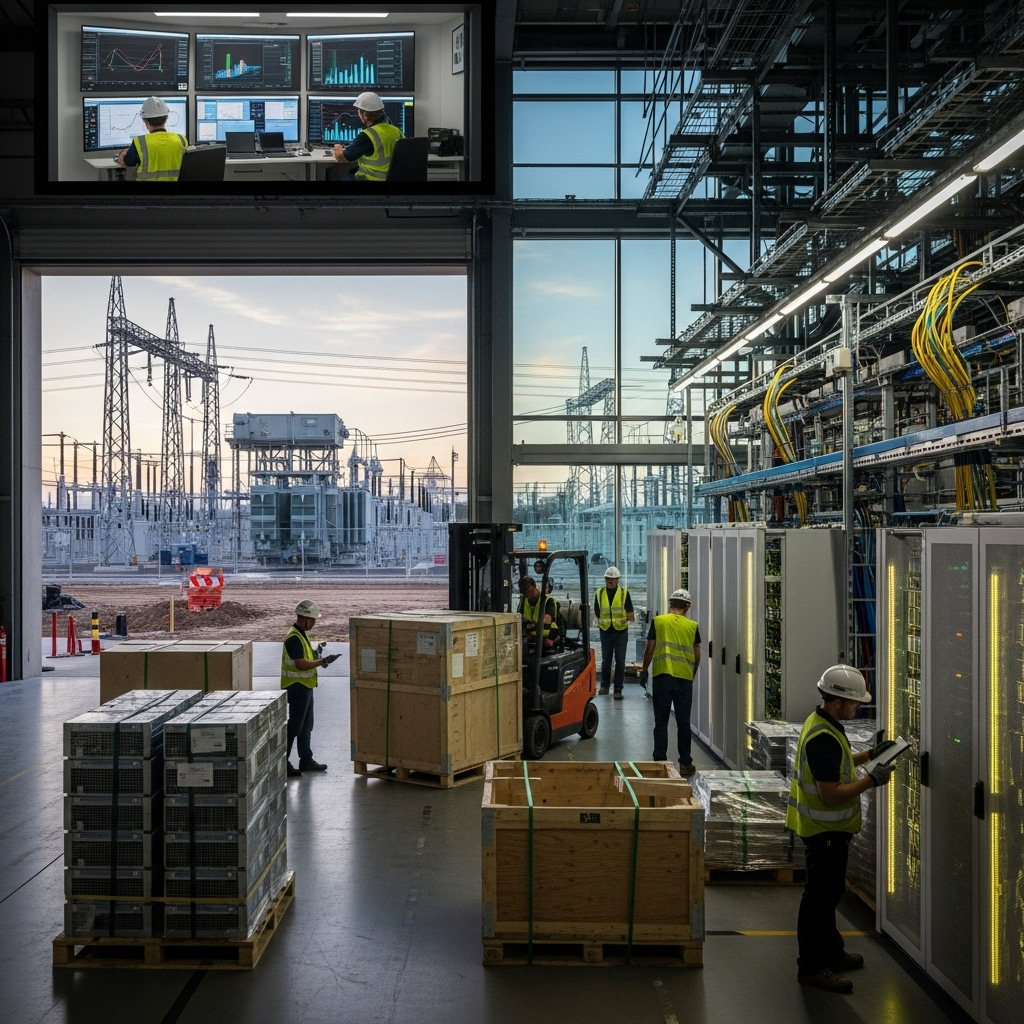
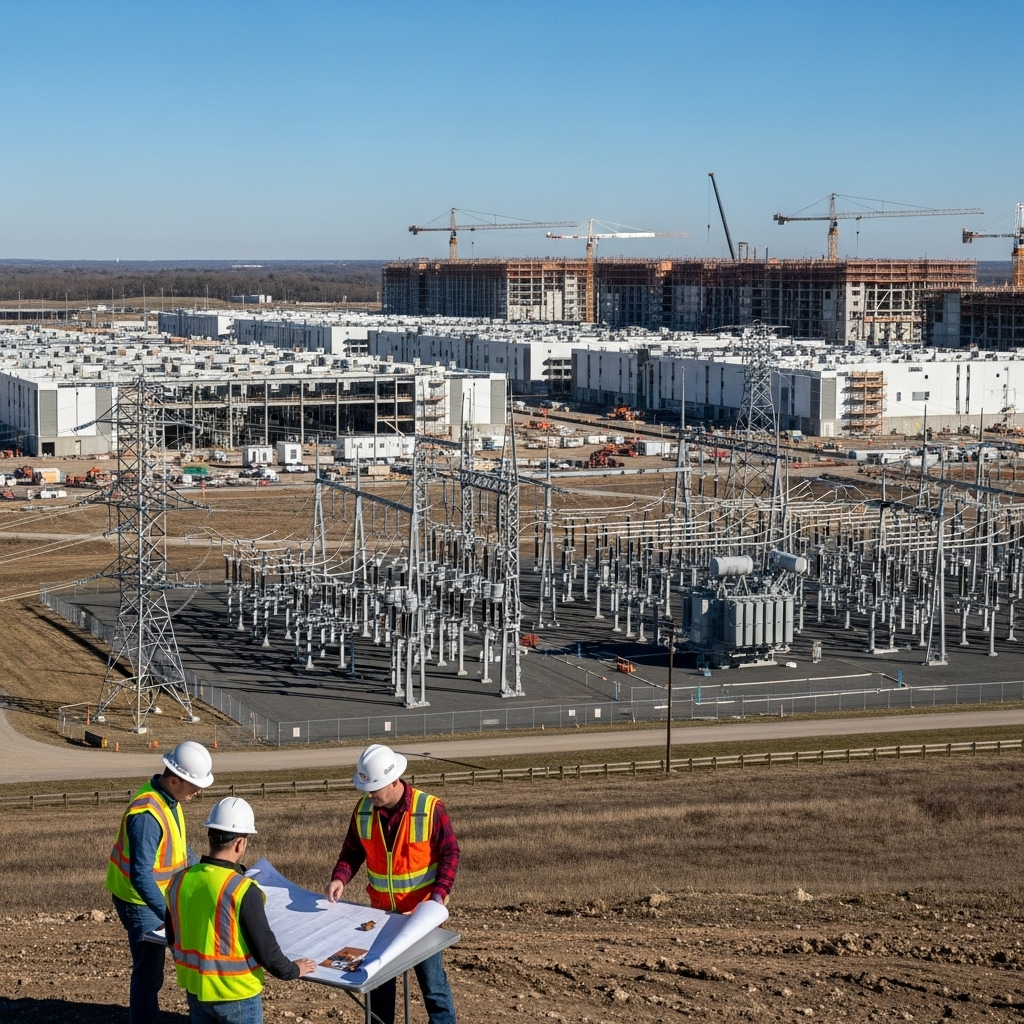
There’s also a constraint even tougher than money: electricity. The 16-gigawatt buildout implied by OpenAI’s agreements with Nvidia and Advanced Micro Devices would require power roughly equivalent to 15 of the newest U.S. nuclear reactors. Georgia’s Vogtle 3 and 4 units, each about 1.1 gigawatts, ultimately cost more than $30 billion and took 15 years to complete, far above their initial $14 billion, eight-year plan. While small modular reactors are often cited as a future solution, none have been built in the U.S., and no near-term projects are scheduled. In the meantime, many AI facilities may have to lean on gas turbine generators that ramp quickly but face efficiency, emissions, and local permitting hurdles.

Ripple effects and counterparty risk

If the financing or power doesn’t materialize, the knock-on effects could be severe. Consider Oracle: after unveiling its cloud deal with OpenAI, Oracle’s shares surged 36% in a single session, adding about $248 billion in market value. Should OpenAI struggle to fund its obligations, that optimism could unwind, just one example of the counterparty risk radiating from a single private company to chip suppliers, cloud hosts, land developers, utilities, and equipment makers.

Bubble or breakthrough?

Whether this is a bubble remains an open question. What is clear is the market’s unusual dependence on one start-up’s execution. The next phase of the AI story will turn on simple realities, cash, capital markets, and kilowatts. If those align, today’s spending could seed a durable boom. If they don’t, the 2025 rally may have a single point of failure at its core.