Trump Executive Order Would Direct DOJ to Sue States Over AI Laws


Trump Executive Order Would Direct DOJ to Sue States Over AI Laws

Trump Administration Plans to Challenge State AI Laws

A draft executive order would task the Justice Department with taking legal action against states that enact their own AI regulations, aiming to assert federal authority over emerging technology policy.

Reported Plan

The Trump administration is preparing an executive order that would instruct the Justice Department to take legal action against states enacting artificial intelligence regulations. This initiative was disclosed through a draft order reviewed by The Washington Post and verified by a source familiar with current White House discussions, who spoke anonymously due to the sensitive nature of internal deliberations.

Context: Failed Legislative Push

The move follows a failed attempt by congressional Republicans to secure federal legislation that would block individual states from passing their own laws governing AI technologies.

Federal vs. State Authority

The proposed executive order has raised questions about potential conflicts with the legal boundaries of presidential authority, sparking debate over whether such federal intervention could overstep constitutional limits.

Why States Are Acting

State governments have recently increased efforts to legislate AI, citing concerns over privacy, security, and ethical use. The White House draft seeks to curb these independent actions, aiming for uniform federal oversight instead.

What’s at Stake

If signed, the order would mark a significant escalation in the federal government’s response to state-level technology regulation, likely leading to court battles that could define the balance of power over emerging AI policies.

Status and Outlook

White House officials have not commented publicly on the draft, and the proposal’s future remains uncertain. However, its existence underscores growing friction between federal and state governments as AI becomes more integrated into daily life and the economy.


 

Larry Summers Takes Leave from Harvard Over Epstein Emails


Larry Summers Takes Leave from Harvard Over Epstein Emails

Larry Summers Steps Away from Harvard Amid Epstein Email Probe

University campus building exterior in daylight
  • Former Harvard president and U.S. Treasury Secretary Larry Summers has taken a leave from teaching.
  • Move follows release of emails with Jeffrey Epstein from 2013–2019, published by the House Oversight Committee.
  • Harvard confirmed receipt of the leave notice as it reviews Summers’ ties and related communications.
  • Other instructors will complete the remaining sessions; Summers is not scheduled to teach next semester.

What happened

Larry Summers, the former president of Harvard University and former Treasury Secretary, has taken a leave of absence from his teaching duties at Harvard. The decision comes after email correspondence between Summers and the late financier Jeffrey Epstein surfaced in files released by the House Oversight Committee.

The emails, dated from 2013 to 2019, include an exchange in which Epstein described himself as Summers’ “wing man.”

“Wing man.”

, language used by Jeffrey Epstein in an email exchange referenced in the released files

Harvard’s response

Harvard University confirmed it received notice of Summers’ decision to take leave. The university’s review is focused on clarifying his connections to Epstein following the renewed attention to Epstein’s communications this week.

According to a spokesperson, Summers believes stepping away is in the best interest of the Center he directs while the review is underway. Other instructors will complete the remaining three sessions of the courses he was teaching, and he is not scheduled to teach in the upcoming semester.

Timeline and context

• 2013–2019: Emails between Summers and Epstein are exchanged. • This week: The House Oversight Committee publishes Epstein-related files that include those exchanges.

The release has renewed scrutiny of Epstein’s interactions with prominent figures and prompted Harvard’s review of Summers’ communications and connections.

What’s next

Summers remains on leave while Harvard conducts its review. Instruction for the affected courses will continue under other faculty for the remaining sessions, with no current plans for Summers to teach next semester.


Reporting note: This article is based on Harvard’s confirmation of receipt of Summers’ leave notice, public statements from a spokesperson, and documents published by the House Oversight Committee.


Nvidia Earnings: AI Boom, $500B Forecast, and China Challenge


Nvidia Earnings: AI Boom, $500B Forecast, and China Challenge

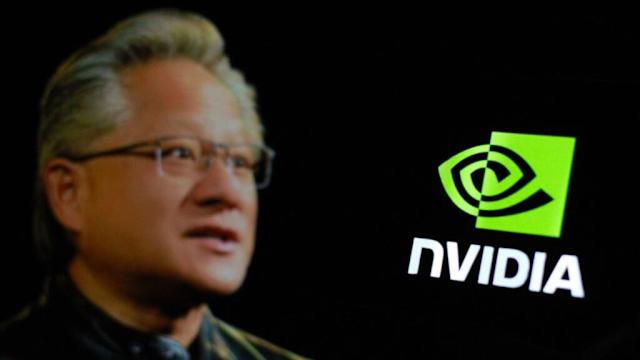
Nvidia delivered third-quarter results on Wednesday that topped analyst estimates for both revenue and profit, while issuing an optimistic outlook for the coming quarter. This has propelled Nvidia shares higher, alongside gains in other AI-related stocks.

The company, a leader in artificial intelligence (AI) chip production, continues to show dominance in the fast-growing GPU market. CEO Jensen Huang expressed strong confidence in Nvidia’s future during a call with analysts, emphasizing robust product demand and growth opportunities.

Key Takeaways

  • Earnings beat on revenue and profit, paired with upbeat guidance.
  • CEO Jensen Huang rejects “AI bubble” concerns, citing real, expanding use cases.
  • Company reaffirms $500B AI chip orders projected across 2025–2026.
  • China sales remain limited ($50M H20 in the quarter), yet overall momentum is strong.

Dismissing AI Bubble Concerns

CEO Jensen Huang addressed investor worries about a potential AI investment bubble, arguing that growth is grounded in real demand. He outlined three drivers fueling AI infrastructure investment:

  1. Greater use of GPUs for non-AI workloads such as data processing.
  2. The rise of new AI-powered applications across industries.
  3. Emergence of autonomous AI systems that require even more compute.

Huang believes the broader market underestimates the scale and necessity of these advancements, pushing back against the “bubble” narrative.

Analyst Sentiment

Market analysts, including Bernstein, suggested Huang’s reassurances helped calm fears after recent volatility in AI-related stocks, noting his leadership restored confidence.

Ambitious Half-Trillion Dollar Forecast

Last month, Huang predicted Nvidia would receive $500 billion in AI chip orders across 2025 and 2026. The company reaffirmed this projection, with CFO Colette Kress confirming Nvidia remains on track.

Kress highlighted recent major deals, including partnerships with firms like Anthropic and an expanded agreement with Saudi Arabia, that were not yet included in the current order backlog, suggesting the figure could rise as additional agreements are finalized.

By the Numbers

  • Projected orders: $500B (2025–2026)
  • Recent partnerships: Anthropic; expanded Saudi Arabia agreement

What Analysts Say

Post-earnings commentary, including from Jefferies, viewed the forecast as a show of strength likely to stabilize AI sentiment into year-end.

Limited China Sales Impact

Nvidia faces hurdles in China due to export regulations and competition. Although licenses were obtained to sell the H20 chip, an adjusted, less advanced version of its 2022 technology, actual sales were modest. Only $50 million in H20 sales were recorded for the quarter, with Kress describing China orders as “insignificant.”

Political factors and tougher market conditions contributed to the lack of major sales. Despite this, Nvidia remains in discussions with U.S. and Chinese authorities to gain permission to sell current-generation chips in China. For now, the outlook does not rely on China demand.

Context

Analysts at Melius noted Nvidia’s strong earnings are even more notable given limited China business, projecting robust free cash flow moving forward.

Conclusion

Nvidia’s latest results underscore sustained demand for AI technology, counter the notion of an AI bubble, and spotlight ambitious growth plans despite geopolitical headwinds. Investors and analysts responded positively, reaffirming Nvidia’s status as a central player in the ongoing AI boom.


Elon Musk Says Work Could Be Optional by 2045


Elon Musk Says Work Could Be Optional by 2045

Elon Musk Predicts Work Will Become Optional by 2045

Overview

  • Speaking at the U.S.-Saudi Investment Forum alongside Nvidia CEO Jensen Huang, Elon Musk projected a major shift in employment over the next 20–25 years.
  • Musk believes advances in robotics and AI could make traditional work unnecessary for most people by 2045.
  • He suggested money itself may become irrelevant, though he offered few specifics on how such an economy would function.
  • His optimism echoes projects like Tesla’s Optimus humanoid robot and his AI startup xAI, reportedly nearing a $200 billion valuation.
  • Observers note Musk’s history of bold predictions, such as widespread robotaxis by 2019 and human missions to Mars by 2024, that have not materialized on schedule.

The Prediction

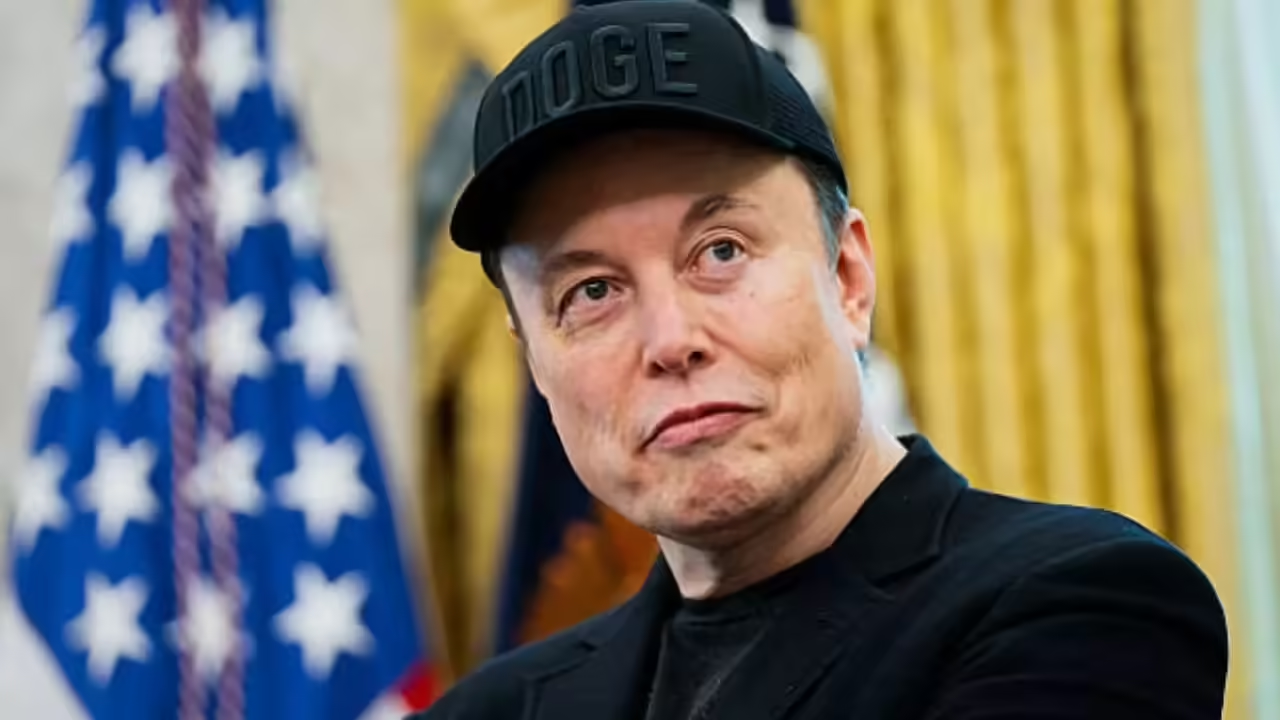
Elon Musk, speaking at the recent U.S.-Saudi Investment Forum alongside Nvidia CEO Jensen Huang, projected a significant transformation in the nature of employment within the next 20 to 25 years. Musk believes advances in robotics and artificial intelligence will make traditional work unnecessary for most people by 2045.

“My prediction is that work will be optional,” Musk stated, suggesting that employment could soon resemble a leisure activity, much like playing sports or enjoying video games. He likened future attitudes towards work to the current choice some people make to grow their own vegetables, despite the convenience of purchasing them from a store.

Money and a Post-Work Economy

Addressing the question of financial stability in a world where work is optional, Musk argued that money itself may become irrelevant thanks to AI and robotics. However, he did not provide specific details on how society would function economically under these conditions.

Automation, Ventures, and Track Record

Musk’s optimism about automation is reflected in his business ventures. Tesla continues to develop the Optimus humanoid robot, and his AI startup xAI is reportedly nearing a $200 billion valuation. Still, Musk’s track record of making bold predictions that miss their mark, such as promising widespread robotaxis by 2019 and expectations of human missions to Mars by 2024, has been noted by observers.

What’s Next

While the future Musk envisions remains uncertain, his comments have reignited discussion about how technology could reshape work and daily life in the coming decades.


Meta Stock Holds Firm Despite Chief AI Scientist Leaving


Meta Stock Holds Firm Despite Chief AI Scientist Leaving

Meta Stock Resilient Amid AI Leader Departure

Key Takeaways

  • Meta’s shares remained strong following Yann LeCun’s departure.
  • LeCun is leaving after 12 years to launch a new startup, following his leadership at FAIR.
  • Meta continues to accelerate AI model rollouts to compete with Google and OpenAI.
  • LeCun champions “world models” emphasizing visual learning and human‑level reasoning.
  • Future collaboration between Meta and LeCun’s new company remains possible.

Market Reaction

Meta Platforms’ shares remained strong today despite the exit of Yann LeCun, the company’s chief AI scientist and a leading figure in artificial intelligence. The stock’s resilience suggests investors remain confident in Meta’s AI roadmap even as leadership evolves.

LeCun’s Departure and Legacy

A Turing Award recipient, Yann LeCun has been instrumental in shaping Meta’s Fundamental AI Research (FAIR) lab. After 12 years, he confirmed he will leave to launch his own startup. Announcing his decision publicly, LeCun expressed gratitude to Mark Zuckerberg and highlighted his pride in FAIR’s achievements, noting its influence on Meta and the broader AI community.

Meta’s Evolving AI Strategy

LeCun’s move comes as Meta accelerates the development and deployment of AI models to rival players like Google and OpenAI. Observers have noted LeCun’s reduced involvement in day‑to‑day AI strategy as the company prioritizes faster model rollouts and rapid innovation cycles.

Vision: “World Models”

While Zuckerberg pushes rapid AI advances, LeCun has advocated for “world models”, AI systems aiming for human‑level reasoning and learning, with an emphasis on visual learning rather than massive data sets. This approach is expected to be central to his upcoming venture.

Potential Collaboration Ahead

Despite leaving his official role, LeCun indicated Meta may collaborate with his new company in the future, a signal that the two could remain aligned on select research and deployment initiatives.

Bottom Line

Meta’s stock holding firm underscores investor conviction in the company’s AI direction, even as one of the field’s most influential figures embarks on a new chapter.


Wall Street Rallies on AI Boom, Rate Cut Expectations


Wall Street Rallies on AI Boom, Rate Cut Expectations

Wall Street Surges on Strong AI Earnings and Rate Cut Optimism

Market Snapshot

  • S&P 500: +1.7%
  • Dow Jones Industrial Average: +581 points (+1.3%)
  • Nasdaq Composite: +2.2%
  • Nvidia: +3.9% after earnings beat and upbeat guidance
  • Palantir Technologies: +5.1%; Oracle: +2.8%
  • Walmart: +3.3% on stronger results and raised outlook
  • 10-year Treasury yield: 4.13% → 4.10%
  • Japan’s Nikkei 225: +2.6%; South Korea’s Kospi: +1.9%

Market Overview

Wall Street experienced robust gains Thursday as optimism around artificial intelligence and potential interest rate cuts fueled investor enthusiasm. The S&P 500 jumped 1.7%, nearing its previous all-time high set nearly a month ago. Meanwhile, the Dow Jones Industrial Average climbed 581 points (1.3%), and the Nasdaq Composite rose 2.2%, reflecting broad market strength.

AI Earnings Lead the Rally

Nvidia led the rally, surging 3.9% following a quarterly earnings report that exceeded analyst predictions. The company also delivered an upbeat revenue forecast, helping soothe concerns that major AI-linked stocks might be overvalued, an anxiety reminiscent of the early 2000s dot-com boom. By posting continuing strong profits and projecting further growth, Nvidia and its AI sector peers offered justification for the dramatic recent run-ups in their share prices.

Other technology companies tied to artificial intelligence also saw significant advances. Palantir Technologies was up 5.1%, while Oracle gained 2.8% in the wake of Nvidia’s results.

Labor Market Resilience and Fed Outlook

The rally was further supported by economic data suggesting continued strength in the U.S. labor market. A delayed September jobs report indicated that hiring was stronger than anticipated, although the unemployment rate ticked up slightly. According to Seema Shah, chief global strategist at Principal Asset Management, the data suggests economic resilience while also offering possible justification for the Federal Reserve to consider an interest rate cut at its December meeting. Trader expectations for a rate reduction rose to 42%, up from 30% the day before.

Interest rate policy remains a major driver for stock prices, with hopes for further cuts providing stimulus for equities. Lower rates tend to boost investment and economic growth but can also threaten higher inflation, which remains above the Federal Reserve’s 2% goal.

Beyond Tech: Retail Strength

Walmart shares advanced 3.3% after the retail giant reported stronger-than-expected quarterly results and raised its financial outlook for the rest of the year. The company has attracted value-conscious shoppers amid ongoing economic worries, positioning itself for a robust holiday season.

Bonds and Global Markets

Bond markets also responded, with the yield on the 10-year Treasury note slipping from 4.13% to 4.10%. Overseas, equity markets rallied in Europe and Asia, highlighted by Japan’s Nikkei 225 rising 2.6% and South Korea’s Kospi up 1.9%.

Outlook

The day’s market surge demonstrates continued investor confidence in technology and hopes for supportive monetary policy as 2025 unfolds.


CAG Launches Tech-Driven Reforms for Public Audit in India

CAG Launches Tech-Driven Reforms for Public Audit in India

CAG Adopts Technology to Modernize Public Audits

Summary

India’s Comptroller and Auditor General (CAG) is rolling out data-driven, technology-enabled reforms to modernize public audits, standardize methods, and elevate transparency, anchored by a new Centre of Excellence for Financial Audit in Hyderabad and the development of a proprietary Large Language Model, CAG-LLM.

A Tech-Driven Overhaul of Public Audits

India’s Comptroller and Auditor General (CAG) is initiating a comprehensive transformation of the country’s public audit process, focusing on data-driven and technology-enabled reviews. This overhaul includes the adoption of artificial intelligence (AI), advanced analytics, and increased institutional competence to ensure more effective financial oversight.

Centre of Excellence for Financial Audit, Hyderabad

A major step in this direction is the creation of a Centre of Excellence for Financial Audit in Hyderabad. Announced by Deputy CAG (Commercial & Report Central) A.M. Bajaj, the center aims to unify and standardize audit methods across government departments.

Currently, inconsistent audit templates among autonomous bodies complicate policy decisions; the new facility hopes to address this by enabling clear, comparable, and robust financial reporting throughout the public sector. The Centre of Excellence is expected to serve as an innovation and training hub, bringing global best practices into India’s financial auditing system. It will also reinforce the CAG’s role as the premier audit institution and set new international standards for professionalism and transparency in audits.

What the Centre Will Enable

  • Unified audit methodologies and templates across departments
  • Training and capacity-building in data-driven audits
  • Adoption of global best practices and standards
  • More comparable and decision-ready financial reporting

Integrating Data Across Audit and Accounting

As part of the reforms, departments have been instructed to break down barriers between audit and accounting functions. Treating accounts offices as valuable sources of detailed financial data, the initiative encourages audit teams to draw on a wide array of documents, such as vouchers and sanctions, through integrated systems.

This represents a transition from traditional sample-based audits towards comprehensive analysis of entire datasets using advanced technology.

CAG-LLM: AI for Targeted, Evidence-Based Audits

Central to these technological advancements is the development of CAG-LLM, a proprietary Large Language Model built locally. This AI tool will provide predictive insights, detect anomalies, and enhance risk assessments, allowing audits to be more targeted and based on thorough evidence.

From Sample-Based to Full-Dataset Audits

  • Automated anomaly detection across entire ledgers
  • Risk scoring for targeted scrutiny
  • Faster evidence collection via integrated document access

Embedding ESG Into Public Financial Management

In addition, the CAG is increasingly factoring in environmental, social, and governance (ESG) standards within its auditing framework. This expanded focus aligns with global trends around sustainability and responsible public financial management.

Expected Impact: Transparency, Trust, and Better Policy

Through these measures, emphasizing technology, data integration, and standardized procedures, the CAG aims to enhance transparency, public trust, and the quality of audits, supporting more informed policymaking and sustainable governance.

Key Reforms at a Glance

  • Centre of Excellence for Financial Audit (Hyderabad)
  • Standardized audit templates and methodologies
  • Integrated access to vouchers, sanctions, and accounting data
  • Shift to comprehensive dataset analysis using AI and analytics
  • CAG-LLM for predictive insights, anomaly detection, and risk assessment
  • Incorporation of ESG standards in audit frameworks
 

Nvidia’s AI Boom: CEO Optimistic, Experts Warn of Risks


Nvidia’s AI Boom: CEO Optimistic, Experts Warn of Risks

Nvidia’s AI Surge Faces Optimism and Skepticism

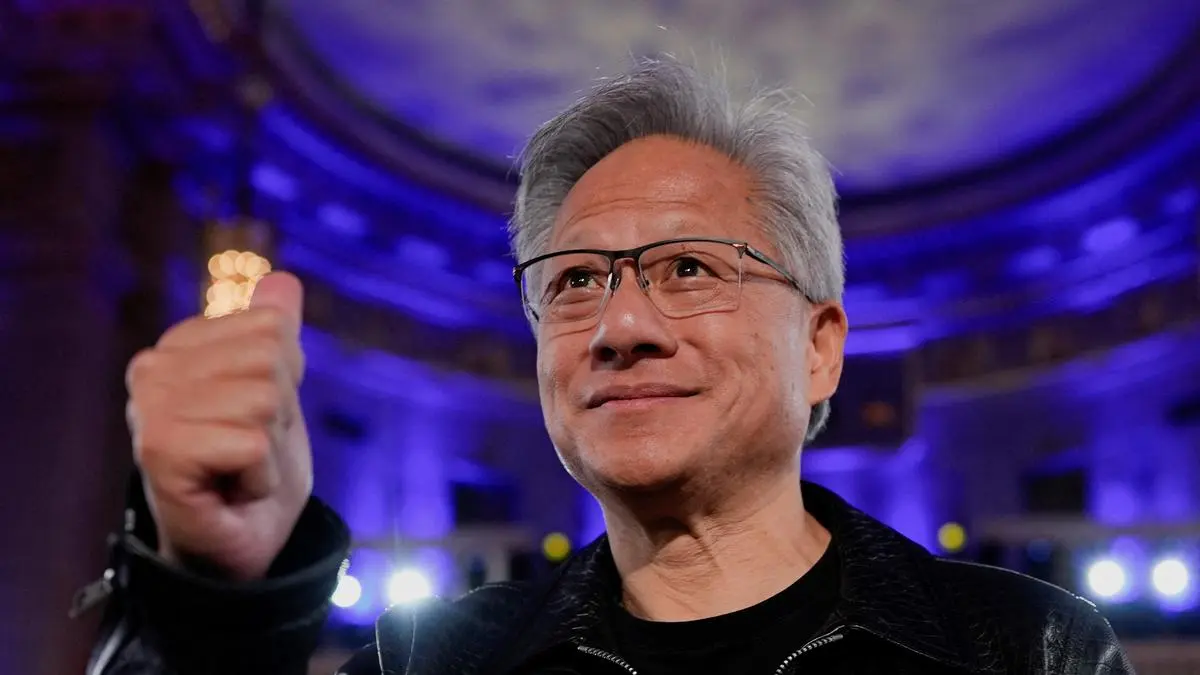
Nvidia CEO Jensen Huang insists the world is witnessing an artificial intelligence revolution, not a speculative bubble, a claim that divides investors as the company posts record profits amid persistent market doubts.

Earnings Surge and “Tipping Point” Claims

Nvidia’s recent earnings report surpassed forecasts, driving its market valuation above $4.5 trillion. Huang asserts that Nvidia’s computing technology is becoming essential across industries, powering everything from software development to advanced robotics. He sees this as a “tipping point” for AI’s role in daily life.

“The world is witnessing an AI revolution, not a speculative bubble.”

, Jensen Huang, Nvidia CEO

By the Numbers

  • Market value: $4.5T+
  • Quarterly revenue: $57B
  • 61% of revenue from four customers
  • Long-term capacity contracts: $26B

Customer Concentration and Profit Risks

Much of Nvidia’s explosive growth, however, comes from just four major customers, as revealed in regulatory filings. In the latest quarter, 61% of Nvidia’s $57 billion revenue stemmed from these clients, believed to include tech giants such as Microsoft and Meta. This degree of customer concentration raises risks, especially as many AI ventures and startups behind the spending remain unprofitable.

Circular Deals and Massive AI Investments

Furthermore, Nvidia has dramatically increased spending on renting its own chips back from these cloud providers, locking in $26 billion, up from $12.6 billion last quarter, in long-term contracts running through at least 2031. The company is also making hefty investments in leading AI labs, including up to $100 billion for OpenAI and $10 billion for Anthropic, among its major clients.

This circularity, where Nvidia sells to cloud builders, rents capacity from them, and invests in their operations, concerns some analysts. Chaim Siegel, of Elazar Advisors, warns that much of the boom relies on loss-making companies and projects, risking a sharp downturn if spending pulls back before profits materialize.

Huang’s Thesis: Three Market Transitions

Still, Huang dismisses talk of a bubble, emphasizing three transitions in the market that he believes will drive durable demand for AI infrastructure and cement Nvidia’s position:

  • Software migration: The shift of traditional software to Nvidia’s architecture.
  • New AI applications: The rise of tools like coding assistants.
  • From virtual to physical: Expanding AI into autonomous vehicles and robotics.

Infrastructure Constraints

Yet even supporters express reservations. Building data centers for this AI future will require vast resources, land, electricity, and financing, challenges Nvidia claims to be addressing through strategic partnerships.

Rising Competition

Competition is also intensifying, with companies like Alphabet (Google’s parent) and Amazon designing and offering their own AI chips. Some analysts, including Jay Goldberg at Seaport Research Partners, doubt Nvidia’s ability to maintain its commanding lead, warning that potential setbacks outweigh the upside surprises.

Bottom Line

In summary, Nvidia stands at the forefront of an AI transformation, according to its CEO. However, questions over profit sustainability, customer dependency, industry competition, and infrastructure needs continue to divide investors over whether the moment marks a true inflection point or signals a looming correction.


Trump Aims to Prevent States from Regulating Artificial Intelligence


Trump Aims to Prevent States from Regulating Artificial Intelligence

Trump Moves to Restrict State Oversight of Artificial Intelligence

Key Points

  • Draft executive order would prohibit states from independently regulating AI and favor a relaxed federal approach.
  • Directs creation of an “AI Litigation Task Force” to challenge and potentially override state-level AI laws.
  • Proposal draws sharp criticism from safety advocates and lawmakers who warn it could weaken consumer protections.
  • Trump has floated adding a ban on state AI laws to the National Defense Authorization Act; similar measures were previously rejected by Congress.
  • Debate reflects tension between innovation, uniform national standards, and public safety/accountability concerns.

Overview

President Donald Trump is preparing a new executive order aimed at prohibiting states from independently regulating artificial intelligence (AI), reigniting debates over safety and accountability in the fast-evolving tech field.

According to a draft seen by CNN, Trump’s proposal directs the U.S. attorney general to form an “AI Litigation Task Force” that would challenge and potentially override state-level AI laws in favor of a more relaxed federal approach. The move comes as AI technology is increasingly integrated into daily life, affecting sectors from healthcare to policing, yet facing limited federal oversight.

Federal Preemption and the Task Force

With Congress yet to enact broad AI legislation, several states have implemented rules addressing concerns such as deepfake technology and discriminatory algorithms in hiring. However, Trump’s push for federal preemption has drawn sharp criticism from safety advocates and lawmakers. They warn that blocking local protections could leave consumers vulnerable and make it easier for tech companies to avoid responsibility if their systems cause harm.

“The policy of the United States is to sustain and enhance America’s global AI dominance through a minimally burdensome, uniform national policy framework.”

The Legislative Path

Trump has also floated the idea of embedding a ban on state-level AI laws into the National Defense Authorization Act. Congress previously rejected similar Republican-backed proposals, notably voting to remove a lengthy moratorium on state AI enforcement from a recent policy bill.

Industry Views and Safety Concerns

Support for less AI regulation is strong in Silicon Valley, but recent safety concerns have intensified criticism of Trump’s approach. Reports have highlighted risks such as AI-induced delusions and self-harm, with major tech firms scrambling to prevent young people from accessing inappropriate AI-generated content. Though the White House called current reports speculative until an official announcement is made, the language of Trump’s draft mirrors positions held by many in tech, including OpenAI’s CEO Sam Altman. Detractors argue that managing various state laws could hamper innovation and America’s competitive edge in the sector.

Bipartisan Pushback

Public opposition has surfaced from across the political spectrum. Florida Governor Ron DeSantis labeled Trump’s plan “federal government overreach” and warned that stopping states from regulating AI would leave the public unprotected against online censorship, child-targeted predatory apps, and resource misuse by data centers. Democratic Senator Ed Markey accused Trump of siding with tech billionaires and attempting to quietly insert an AI regulation ban into the defense bill.

Who’s at the Table

The renewed effort coincides with a recent White House dinner attended by top AI industry figures, including Elon Musk, Nvidia CEO Jensen Huang, and OpenAI President Greg Brockman. This week, hundreds of groups, including labor unions, consumer protection advocates, and educational institutions, sent letters to Congress opposing Trump’s plan and echoing concerns over AI safety.

Advocacy Voices

Alejandra Montoya-Boyer of The Leadership Conference’s Center for Civil Rights and Technology argued the draft order prioritizes corporate interests over public welfare. J.B. Branch, an advocate with Public Citizen, referenced rising AI scams and mental health risks linked to unregulated technology, asserting that blocking state oversight would protect Silicon Valley at the expense of consumers.


What It Means

Trump’s executive order, if finalized, would reshape America’s approach to AI regulation, intensifying the debate over tech innovation versus public safety and accountability. As Congress weighs its next steps, the central question remains whether a uniform federal framework can safeguard consumers while supporting rapid AI advancement, or whether state-level protections are essential guardrails in a high-stakes technological era.


Nvidia, Walmart, Crypto Stocks Lead Major Midday Moves

Nvidia, Walmart, Crypto Stocks Lead Major Midday Moves

Biggest Midday Stock Movers: Nvidia, Walmart, Crypto and Pharma

Several major stocks experienced significant price changes midway through Thursday trading as earnings reports and regulatory decisions shaped market sentiment.

AI and Semiconductors

  • Nvidia, dropped nearly 2%, reversing earlier gains, despite beating expectations for its fiscal third-quarter results and providing stronger-than-expected revenue guidance for the next quarter.
  • Palantir Technologies, down nearly 6% as AI-related names declined alongside Nvidia.
  • AMD, down 5%.
  • Super Micro Computer, down 5%.

Crypto-Linked Stocks

Cryptocurrency-linked assets saw declines as Bitcoin’s value slid further and hopes for interest rate cuts diminished.

  • Strategy, a Bitcoin treasury-focused company, lost almost 7%.
  • Robinhood Markets, fell about 9%.
  • Coinbase, slipped 7%.
  • Circle Internet, down approximately 6%.

Pharma and Biotech

  • Regeneron, shares climbed 4% after the U.S. Food and Drug Administration approved Eylea HD as a treatment for macular edema following retinal vein occlusion.

Retail

  • Walmart, jumped nearly 6% after reporting stronger-than-expected third-quarter earnings. The retail giant posted adjusted earnings per share of 62 cents on $179.5 billion in revenue, surpassing analysts’ forecasts, and raised its full-year sales outlook.

Cybersecurity and Cloud

  • Palo Alto Networks, dipped more than 6% following its announcement to acquire cloud management specialist Chronosphere for $3.35 billion, despite delivering fiscal first-quarter earnings that exceeded Wall Street expectations.

Beauty and Wellness

  • Oddity, surged 11% on better-than-anticipated third-quarter results and an upgraded earnings forecast. Adjusted earnings reached 40 cents per share on $148 million in revenue, topping analyst expectations.

Engineering and Construction

  • Jacobs Solutions, fell 9% despite outperforming earnings estimates for the fiscal fourth quarter and offering a strong outlook for fiscal 2026.

Healthcare

  • Solventum, rose 4% after announcing the purchase of Acera Surgical for $725 million, moving into regenerative wound care markets.

Consumer and Specialty Retail

  • Bath & Body Works, tumbled over 25% as third-quarter results missed analyst predictions, with adjusted earnings of 35 cents per share and $1.59 billion in revenue, below consensus forecasts.